
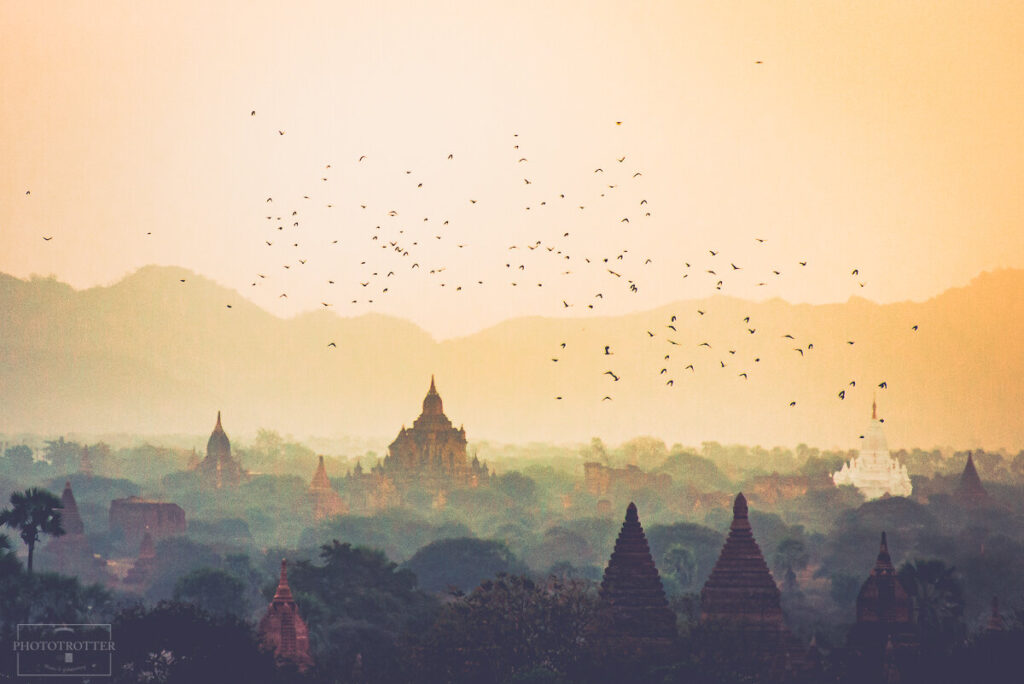
We arrived in Bagan a little shaken. Physically and mentally. The journey to the old capital of the Pagan Empire is quite difficult in a country like Burma. Sorry, Myanmar.
[Somewhat confused between Pagan, Bagan, Burma and Myanmar? A quick interlude, for clarification:
A little more than a millennium ago, while present-day countries were still unassembled, on the banks of the Irrawaddy River, which descends from up north, next to China, all the way down to the Andaman Sea, there was once a great empire, named Pagan, with the eponymous capital, whose name (Pukam, meaning “the city that stomps on its enemies”) deformed in Bagan. The population living on the banks of the Irrawaddy River was called Mranma, or Bamar, and, being the most numerous, they gradually gave their name and their language to the territory, which was called Burma until 1989, when they adopted the ancient resonating name of Myanmar.]
We had flown from Bangkok to Mandalay, where, in an unexpected stroke of luck (given the total lack of communication in English, or the existence of any letter in the Latin alphabet), like the proverbial bling pig who occasionally finds an acorn, we had succeeded to arrive to the bus station, and find the “terminal” and the minibus departing from Mandalay to Bagan.
Where we failed miserably was in our poor choice of seats within said minibus. We retreated, like two turkeys, on the back seat, right on the rear wheel. The less than 200 km trip lasted about four endless hours on terribly damaged roads, spiced with the infernal honking that is the foundation of driving in Myanmar.
[Another interlude, about traffic in Myanmar: legacy of the British occupation, the wheel on the right side of cars was kept in Burma, not out of nostalgia, but for financial reasons, for who has the money to change so many cars? However, through the 70s they thought it would be a good idea to switch driving sides.
The result is that they drive on the right side of the road, with the steering wheel also on the right. The conclusion? Nobody sees anything, so they blare the honks, whatever the vehicle might be: car, van, minibus, moped, bicycle. Not just when overtaking, as you would think, but also as a precautionary measure, so that you won’t get hit from the front by an imprudent overtaker. So any road through Burma is a braying cacophony, bugling like a herd of elephants blowing their noses.]
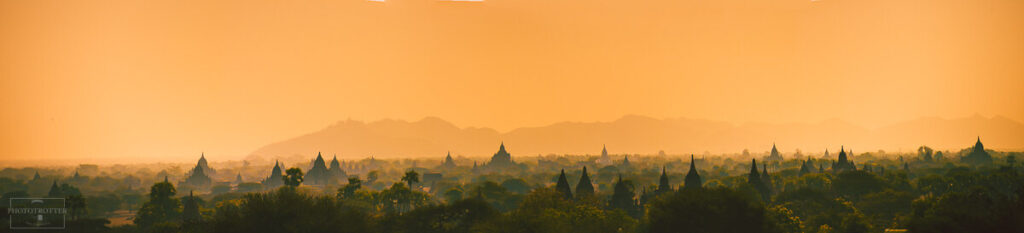
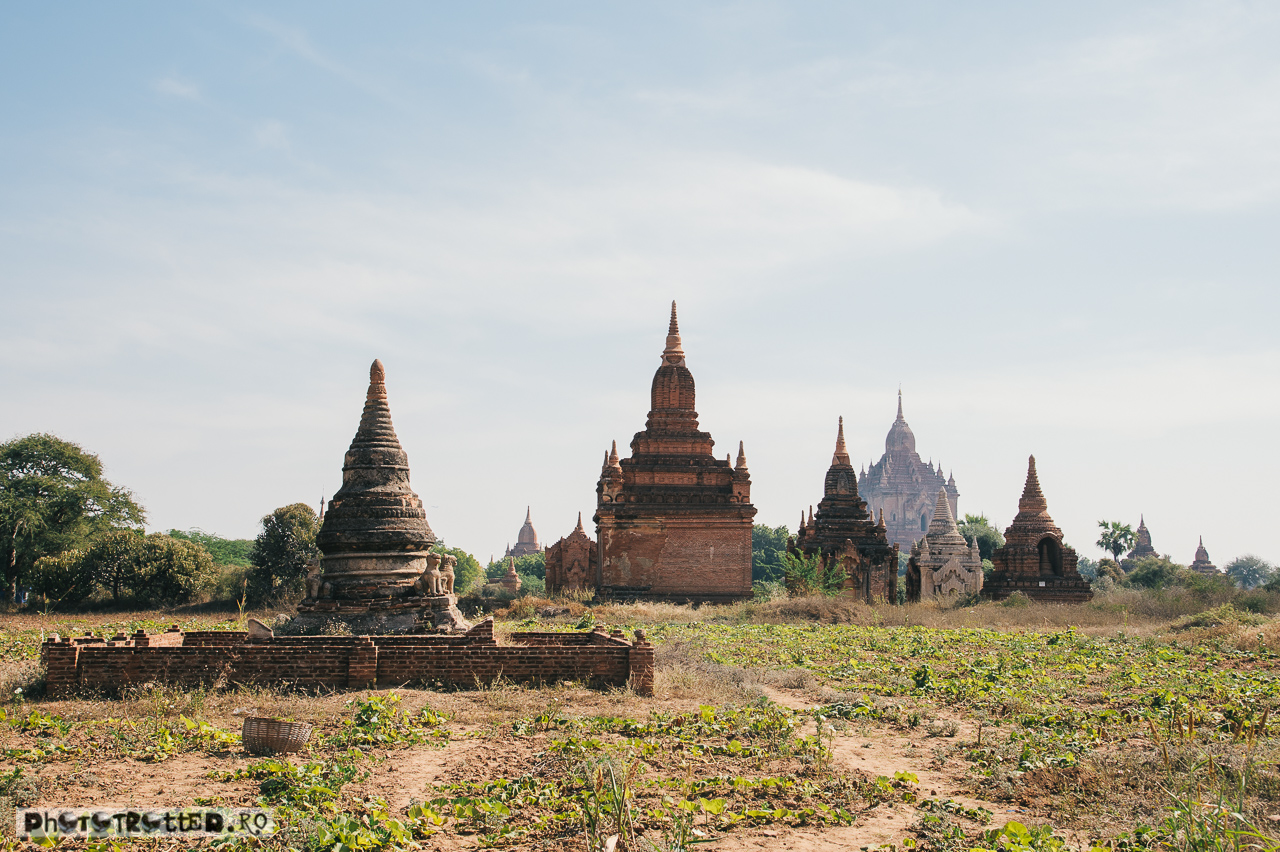
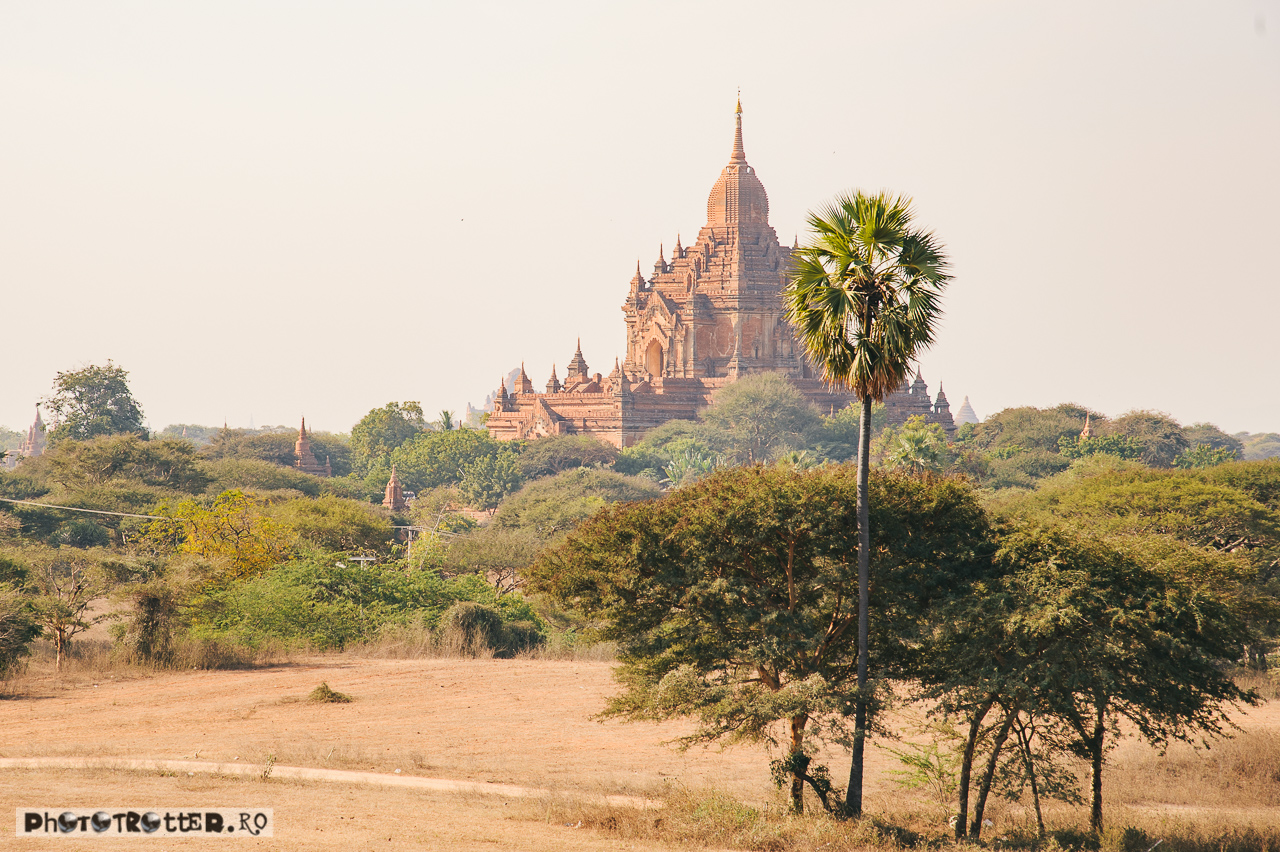
What we were looking for in the heart of Burma was the millennium old city of Bagan, its former glory diminished to roughly one hundred square kilometers of dusty red steppe, sprinkled with some 2000 temples, stupas and pagodas, an impressive number, which seems less massive when you find out that a thousand years ago there used to be more than 10,000 such constructions scattered on the plain of Bagan.
In the face of such architectural, cultural and religious opulence (the temples had schools of Pali language, grammar, science and Buddhist philosophy), we left our phones (no reception, no wi-fi, no problem), grabbed our lanterns and water bottles and jumped on rent bikes to explore low-tech the ancient archaeological wonder.
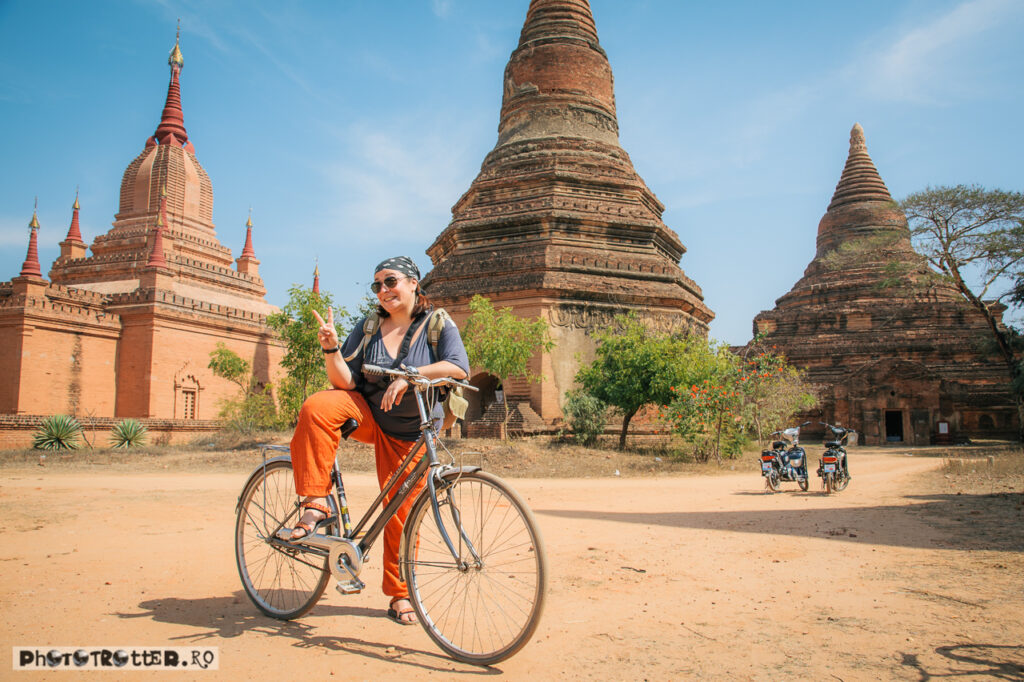
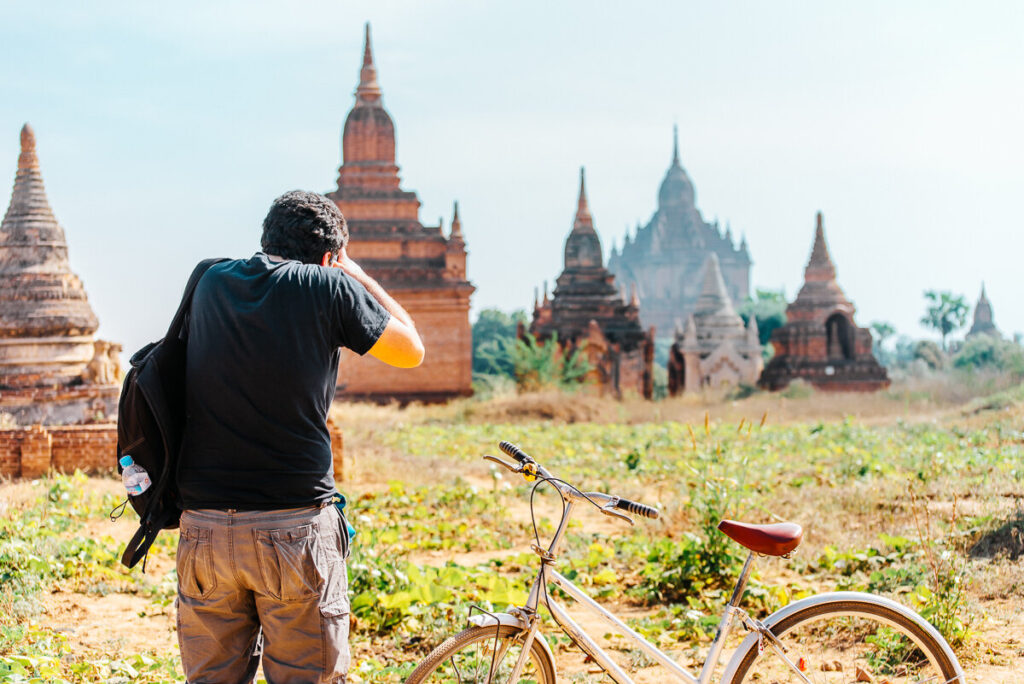
Creak-squeak, creak-squeak… 35 degrees. Shade – diddly squat. The trees are small and twiggy. And anyway, there’s no time to loiter, we only saw… three identical temples since this morning. At least inside it’s cool. And dark. Just how the snakes like their bedrooms. Bare feet (you must take off your shoes before entering), pattering on the cool stone floor in the umbra of some temples where maybe nobody entered for days. Fortunately, that’s exactly why we had brought the headlamps. They were especially appreciated on the dark inner stairs.
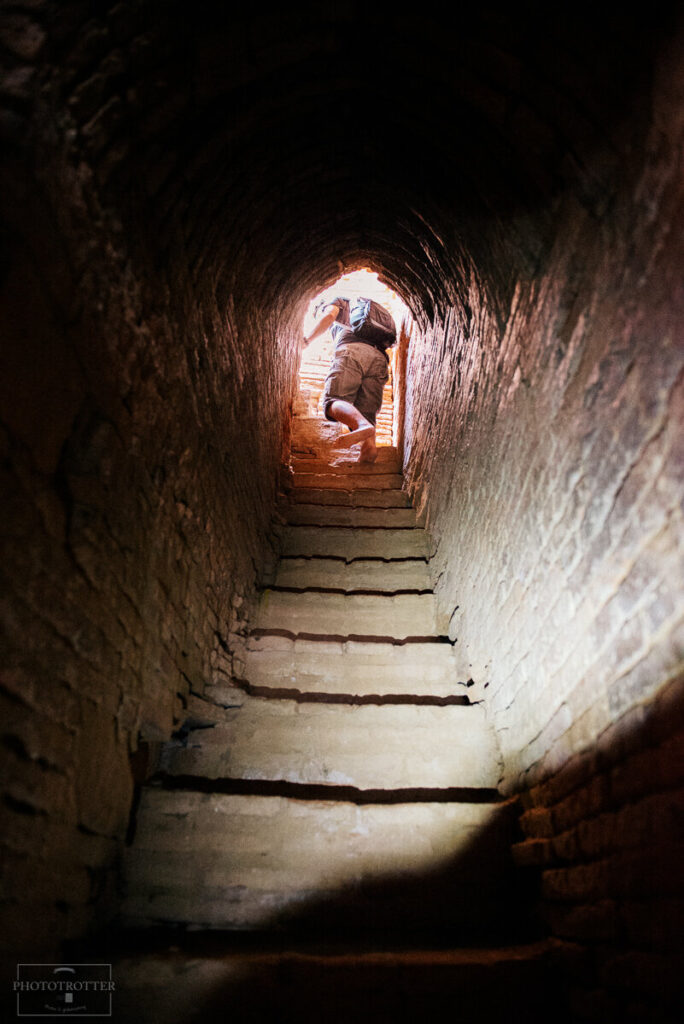
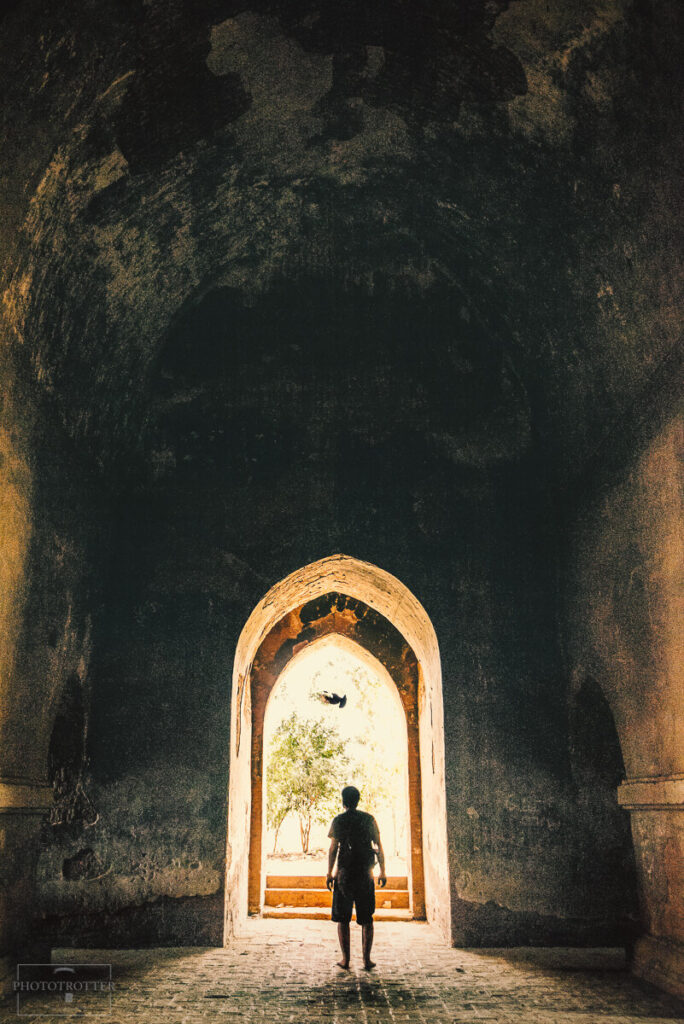
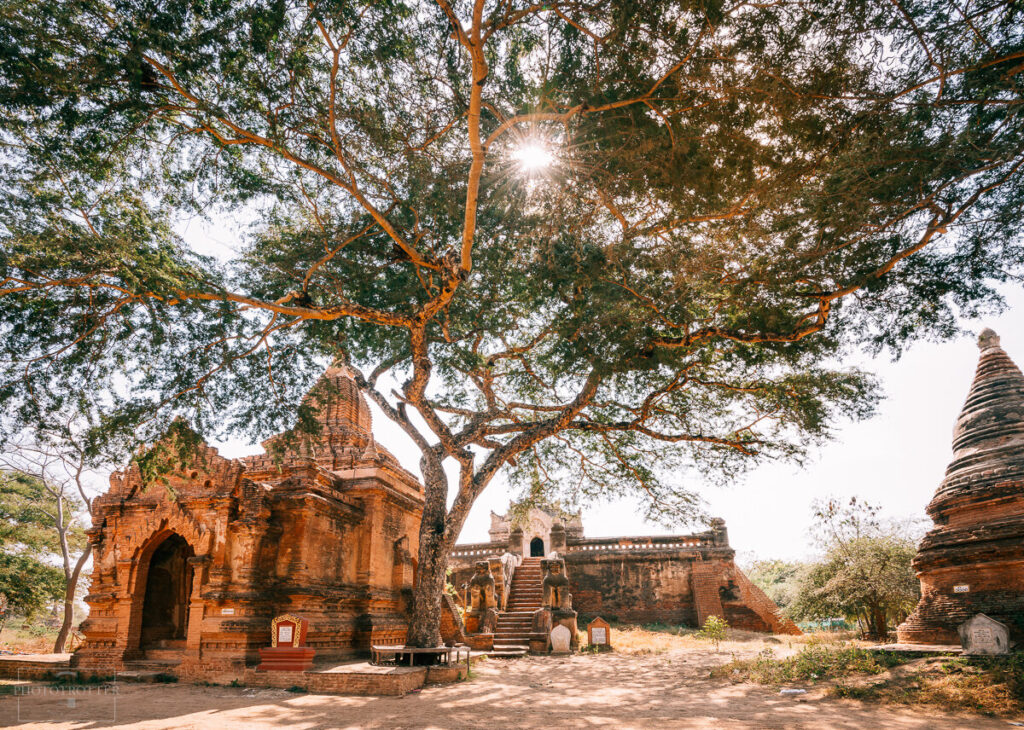
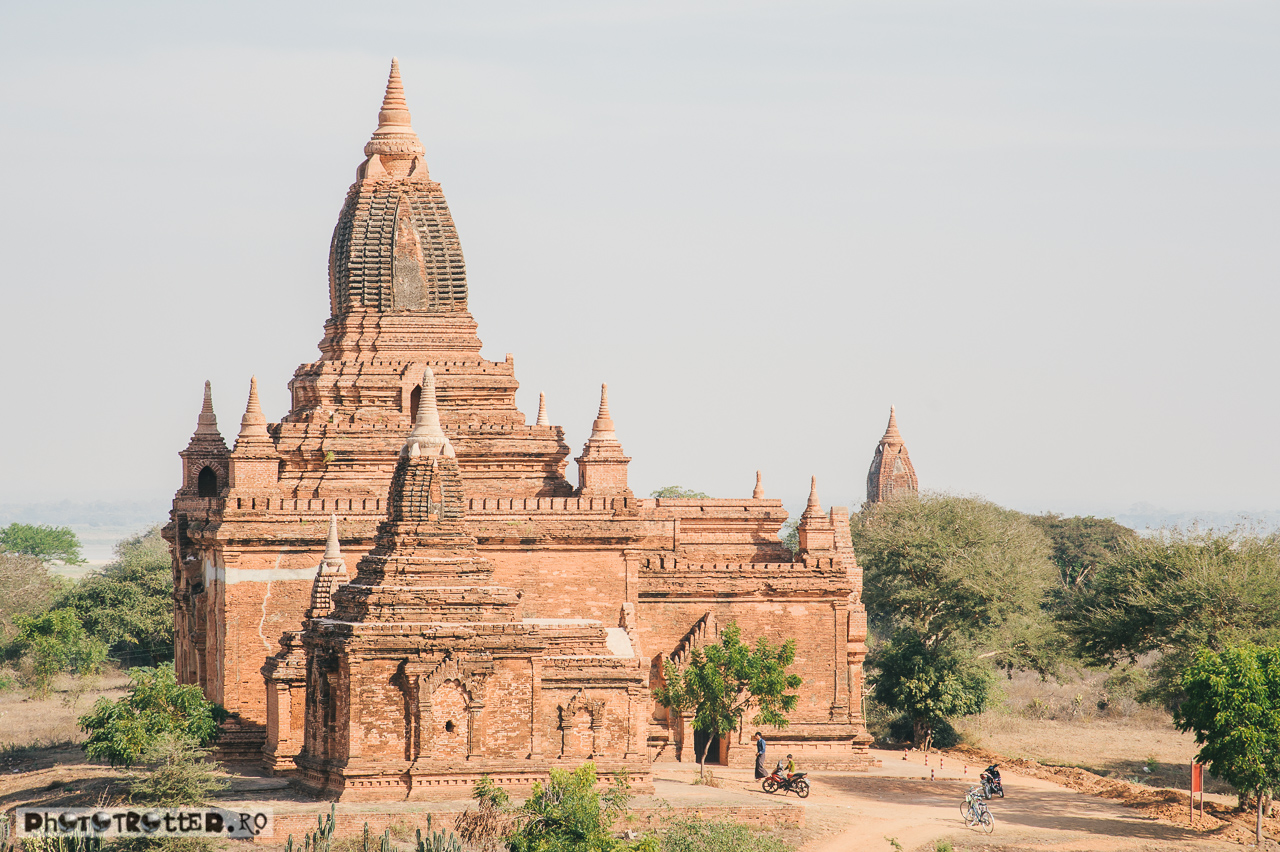
The temples, pagodas, dagobas and rarer vihara and kyaung (monasteries) are mostly abandoned and quite similar to one another. Downstairs there is a reasonably-sized room, called the “lion’s throne” in the symbolism of stupa architecture, often cross-shaped, with one or more statues in the center.
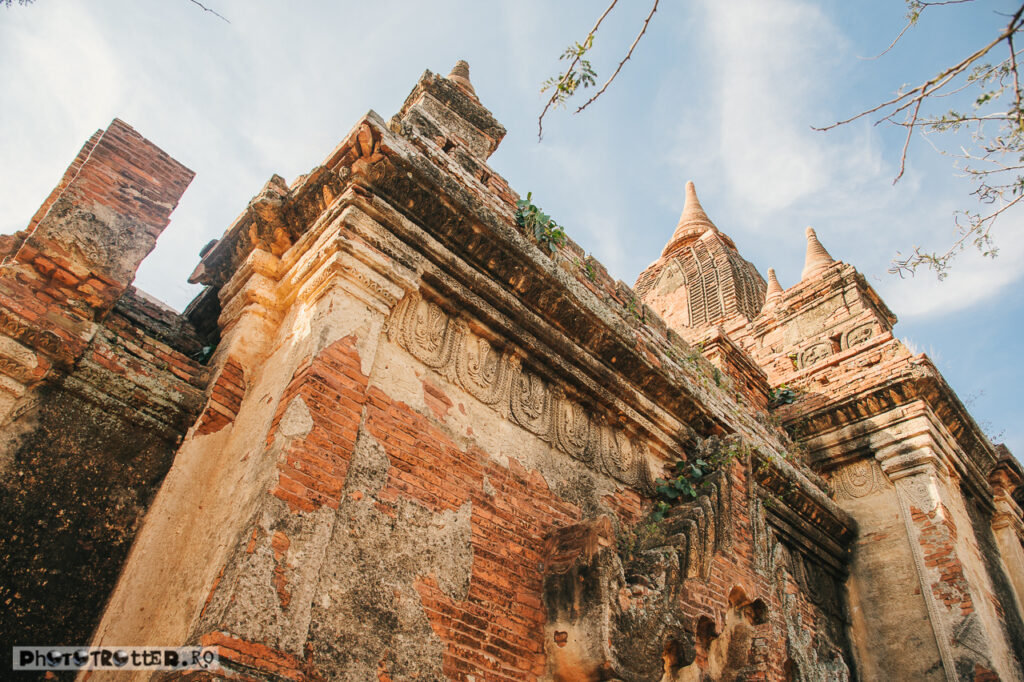
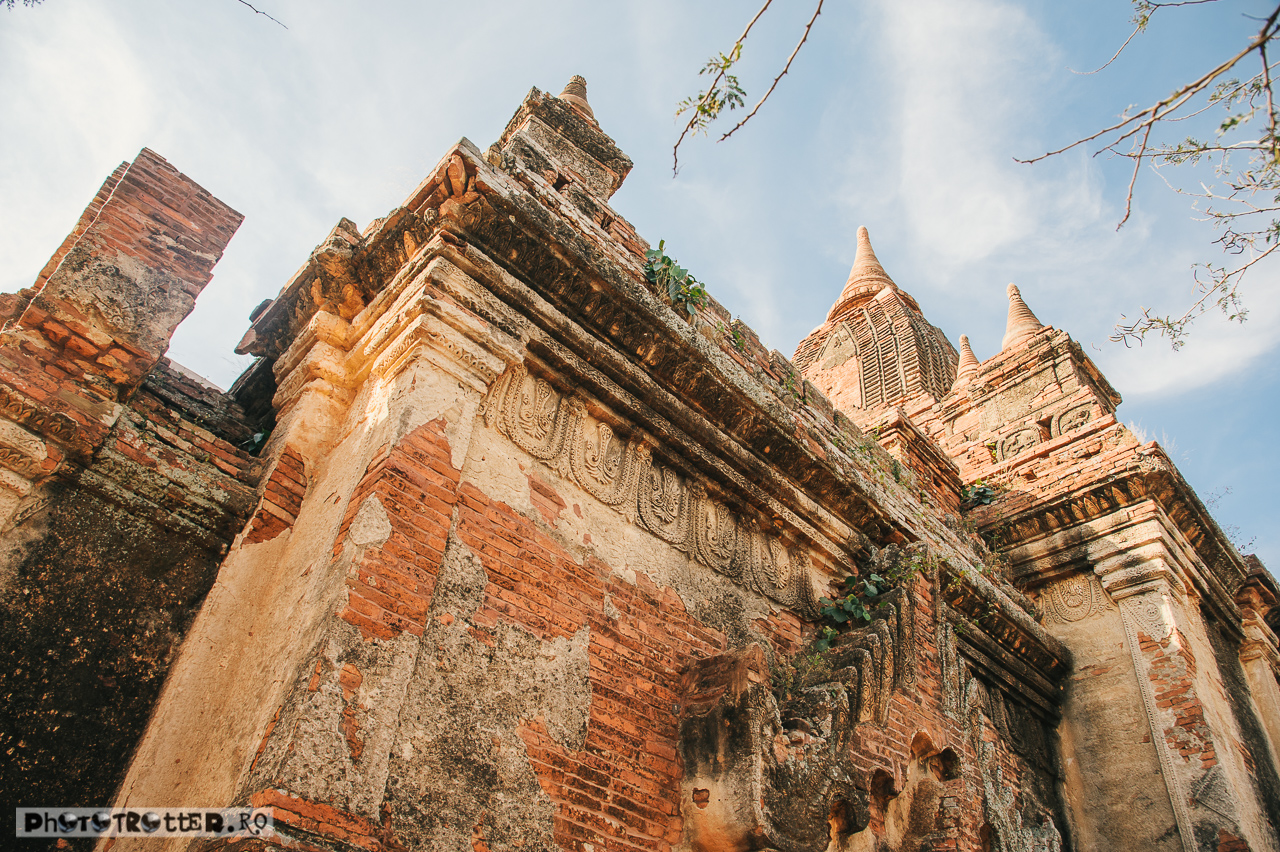
On the sides there are steep and narrow stairs, on which you fumble upwards until you reach the upper level, a larger or smaller terrace around the main dome that forms the typical silhouette of Buddhist dagobas / stupas. They are not terribly ornate, nor painted or carved. They are not well maintained either, because access is free and nobody restores them (yet).
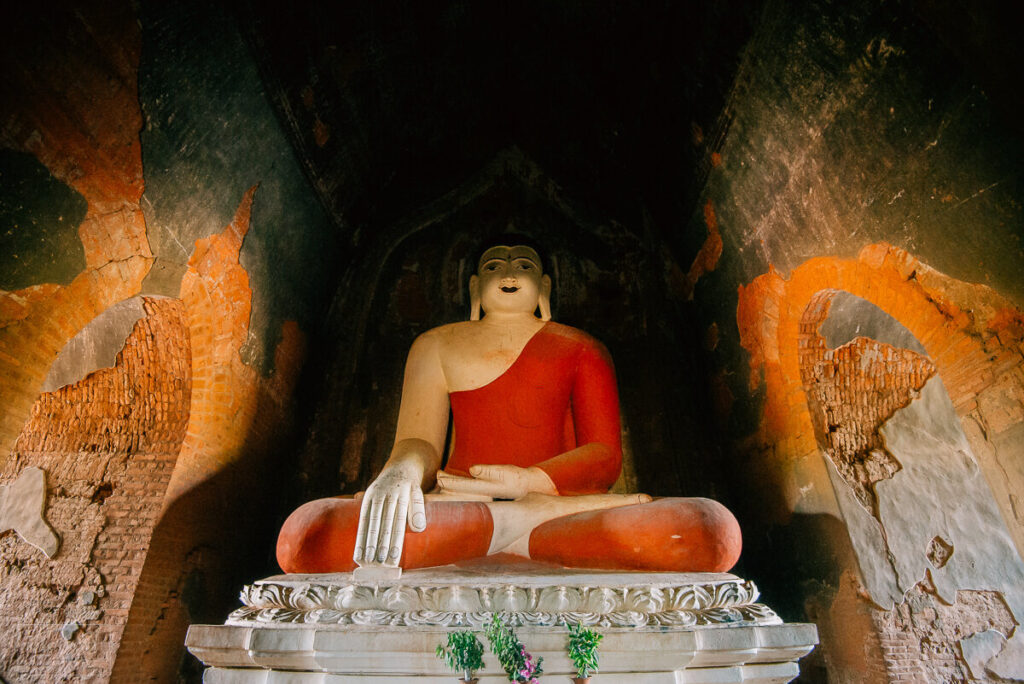
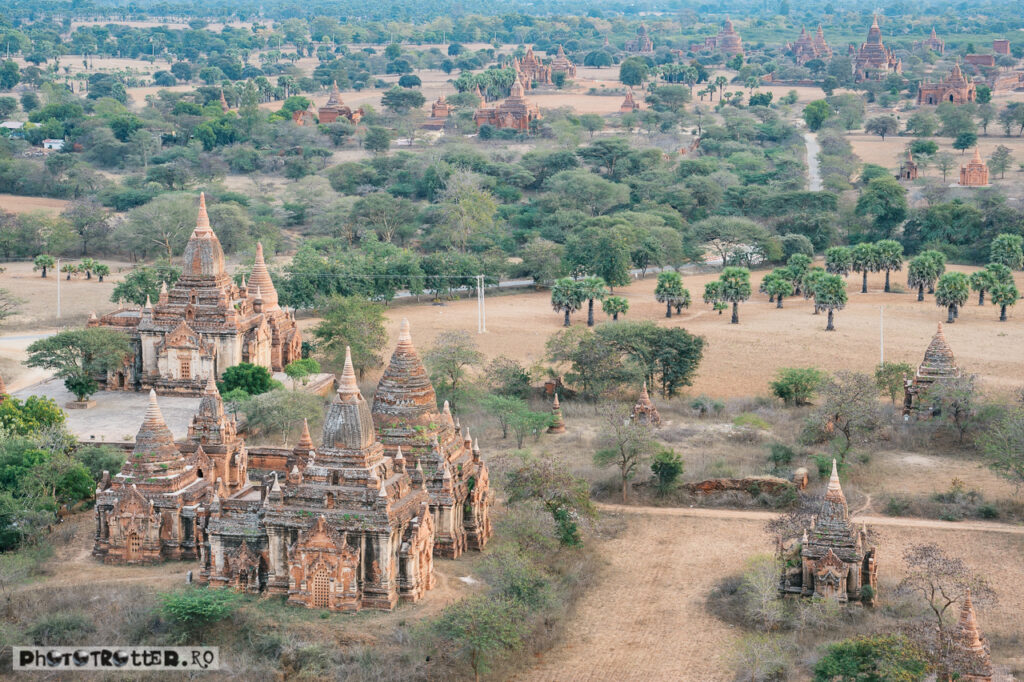
The stupa is found under different shapes and flamboyance levels throughout all Buddhist Asia, representing, depending on the model, either Buddha’s tomb (such as those resembling giant brick mounds) or Buddha’s silhouette in meditation (the bell-shaped ones).
As the legend goes, when Buddha taught his disciples how to take care of his earthly remains after his death, more precisely to place them in four different monuments, they asked him what should these constructions look like. The Buddha took off one of his kasaya robes, folded it several times, and over it laid his alms bowl upside down, hinting the approximate shape of the hives – a rectangular base with a dome above.
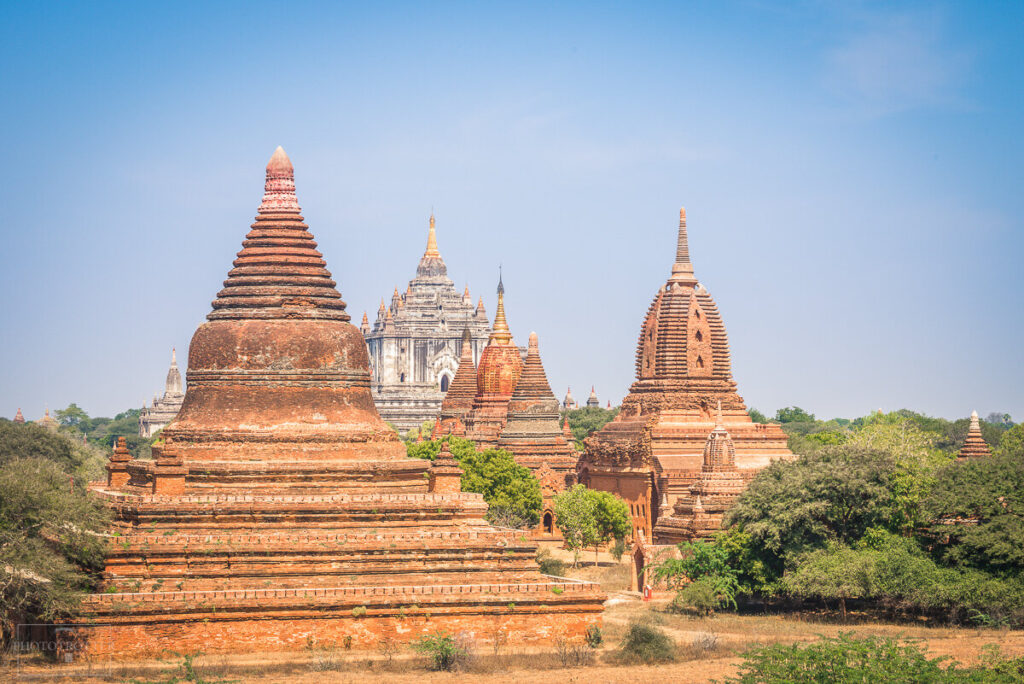
Over this simple shape dozens of symbolic elements have been superimposed – the four sides of the base, oriented towards the cardinal points, represent the four stages of Buddha’s existence – birth, enlightenment, first sermon and nirvana. Regardless of the shape – half-sphere, bell or cone -, the spire is another common element, usually having 13 circles, representing stages of illumination. The umbrellas, also a recurring element, stand for protection and royal grandeur, and at the top are the sun, the moon and a gem, representing awakening, wisdom and enlightenment.
Except for the lion’s throne room below, where you can enter, where there are offerings, statues and access ways (stairs) to the outer terraces, the rest of the stupa, where, theoretically, Buddha’s remains would have been deposited, is hermetic, completely closed. The believer does not necessarily have to enter the hive, his route of worship leads him in meditation around it, on the outside, visualizing illumination – a circular movement similar to the circumambulation around Kaaba in Mecca. This is architecturally more noticeable at the traditional stupas in India and Sri Lanka, those in Myanmar not having a well-defined circular terrace below.
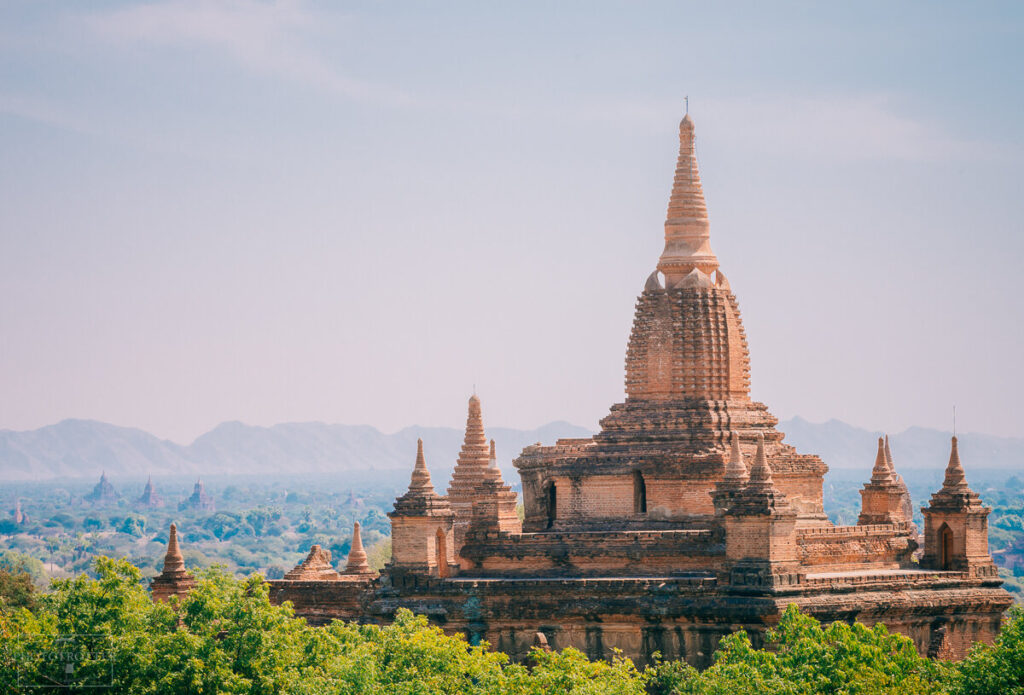
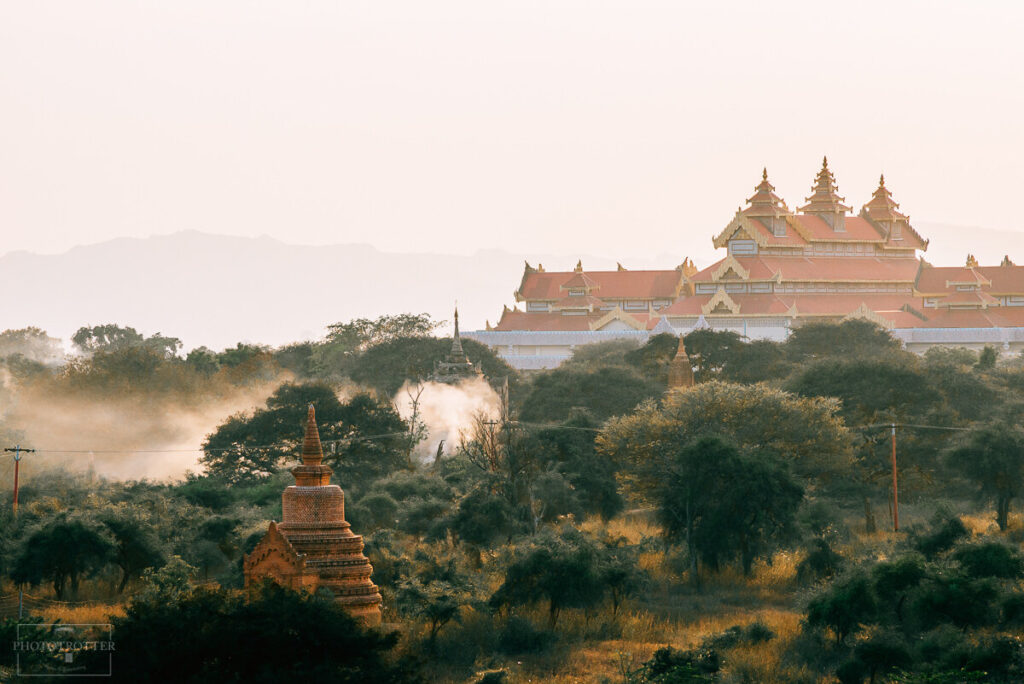
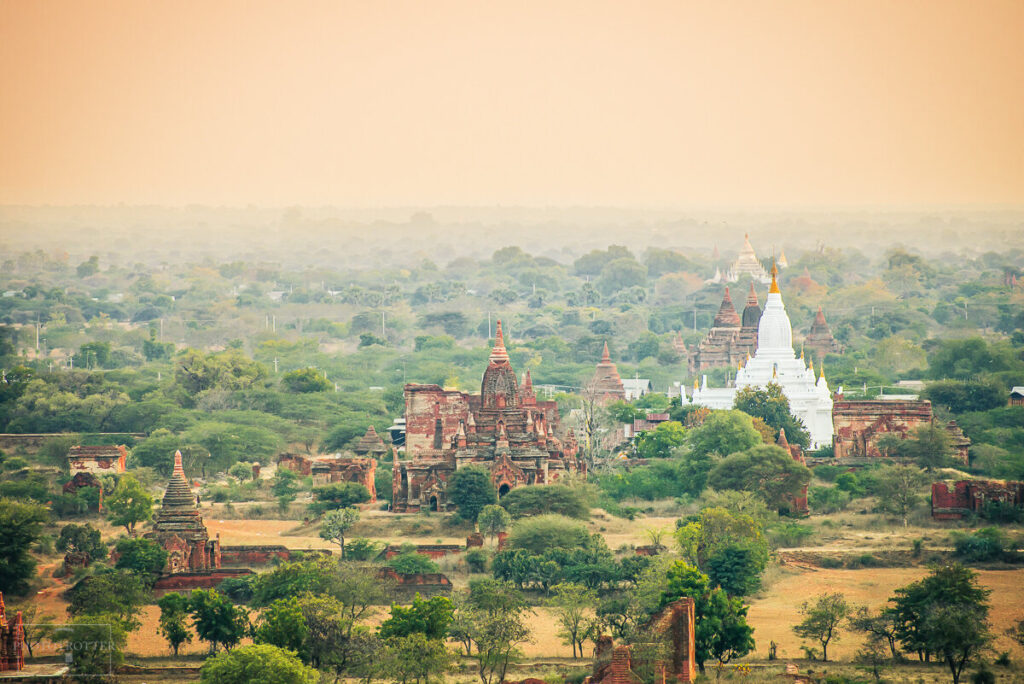
Not knowing the complicated symbolism of a stupa doesn’t make them any less fascinating – two thousand 1000-years old temples, which you can clamber, without any immediate reverence for its religious significance, but stirred by the numerical and historical immensity of the moment.
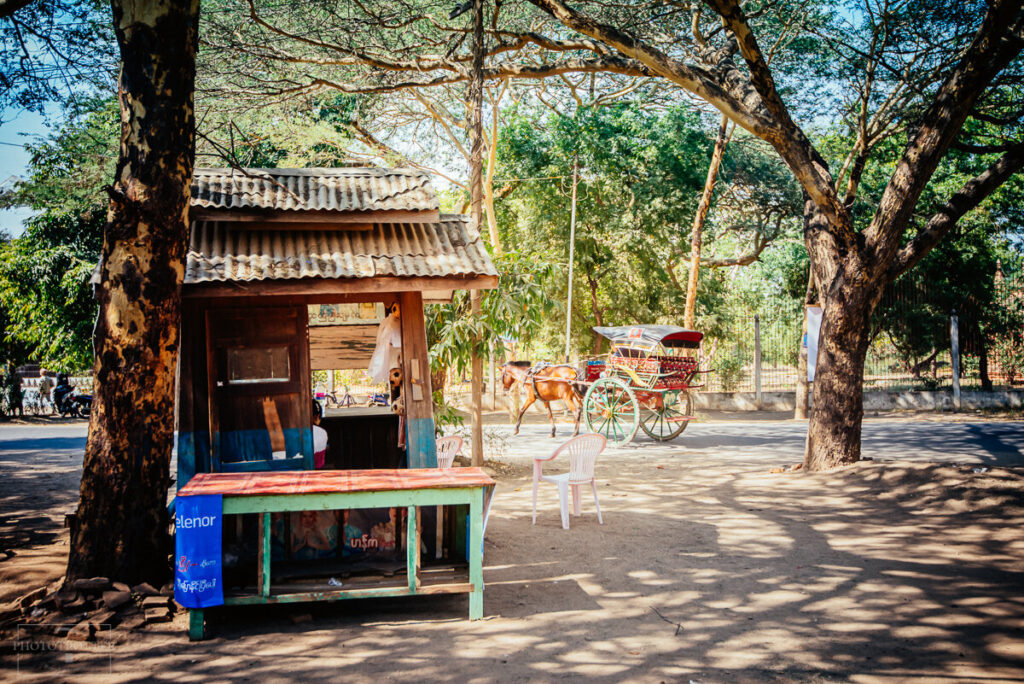
Squatting on a patch of shade (the hot stone is hell for city folks’ unaccustomed bare feet) which you share with a local peddler of consecrated trinkets and magical mandalas, you look down at the few rusty bikes parked in the dust, and at the two-wheeled tonga cart pulled by a scrawny horse and you can almost believe that an English sergeant with a Kipling mustache will step out of it, offering his arm to a young lady with a hat and umbrella. Nothing seems to have changed in the last 100 years. And what do 100 years even mean when you are a temple that has turned 1000?
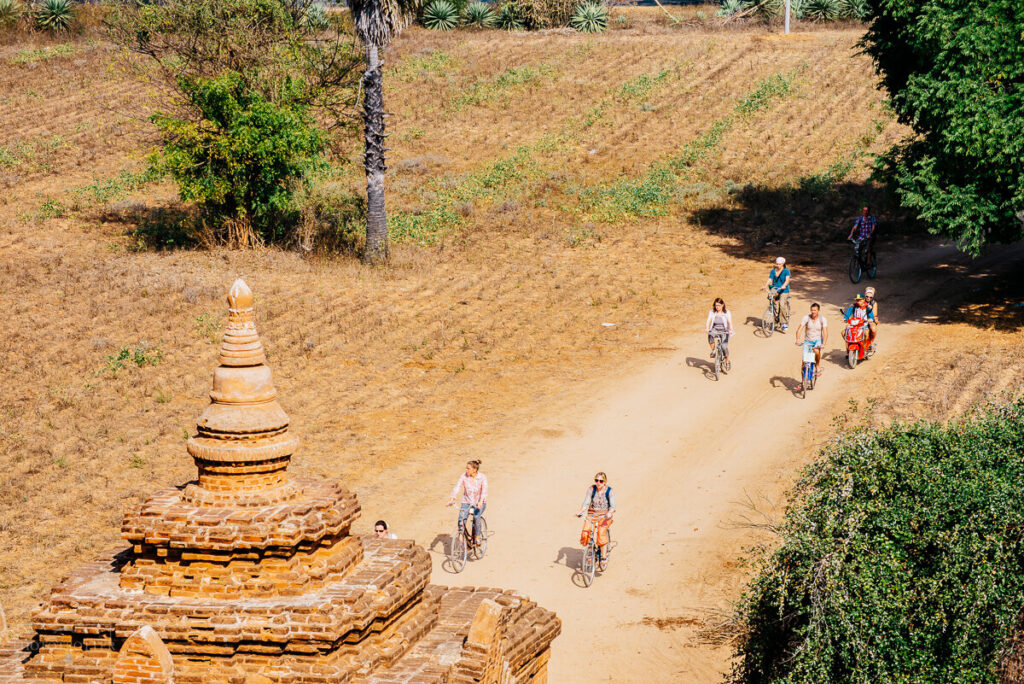
There are not many tourists in Myanmar, but their number is steadily increasing. In Bagan you rarely see them, in the morning for breakfast, in the evening at a restaurant, but during the day the territory is so vast that you rarely see anyone. Save for sunrise and sunset, the flypaper times for all tourist-kind. Then, everywhere you look, you see a stupa covered by tourists sitting comfortably, waiting for the show – in the morning the hot air balloons, in the evening the violently coloured sunset.
One early morning, suitably dressed for the chilly night temperatures, we rode our creaky-squeaky bikes to the nearest stupa, sat on a brick with the rest of the audience and gingerly waited to see the wonders of the…
Sunrise in Bagan. With hot air balloons.
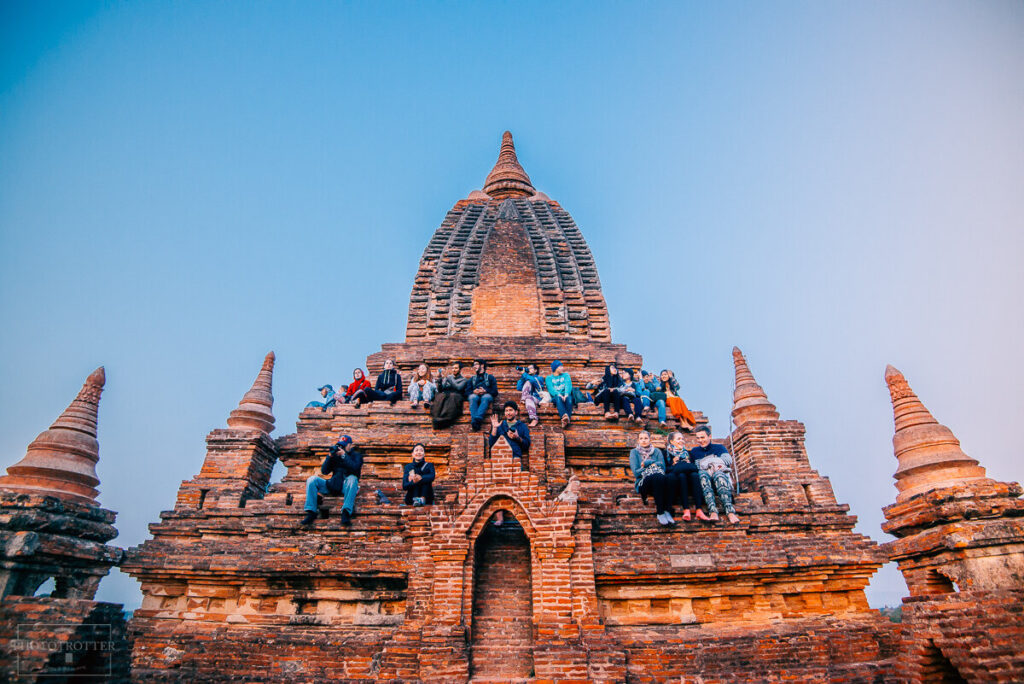
It was worth it. One of the top attractions in Bagan is the hot air balloon flight at sunrise, for approx. an hour.
At first you hear them, when the sun hasn’t even peeked out, whistling somewhere in the distance, coming to life one by one, huddling together like impatient puppies. And when the sun comes up, the show begins. For those high up, and for those below:
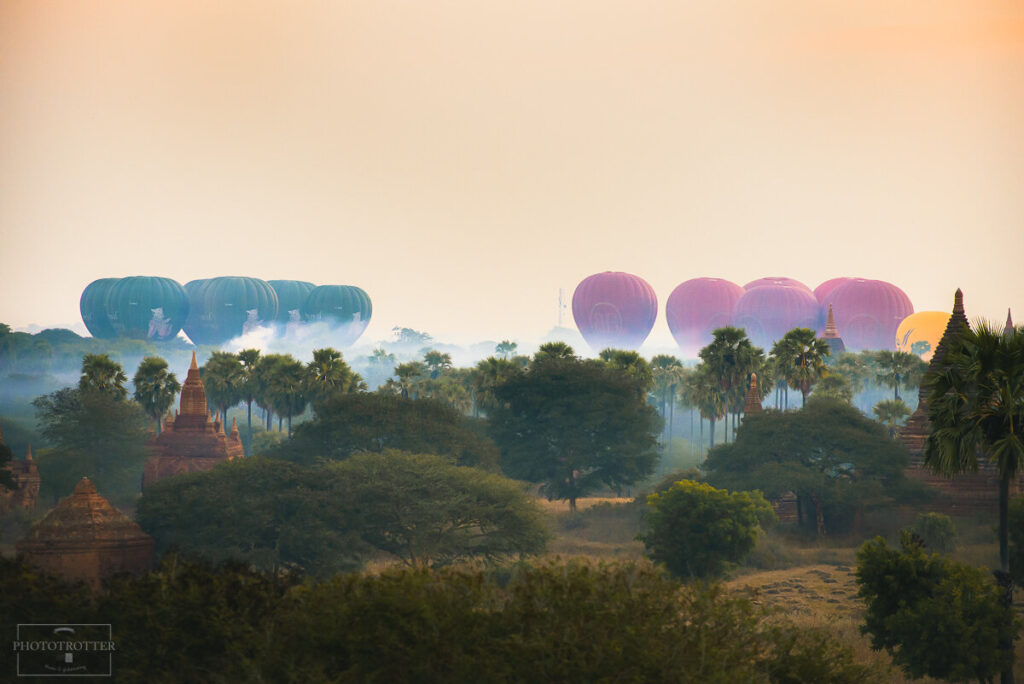
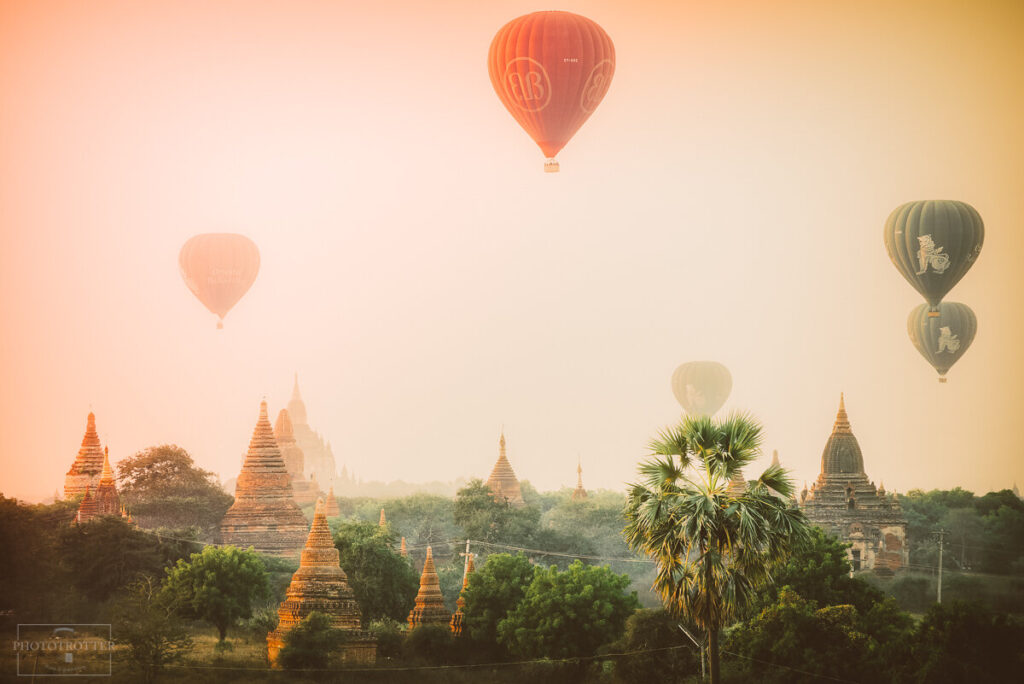
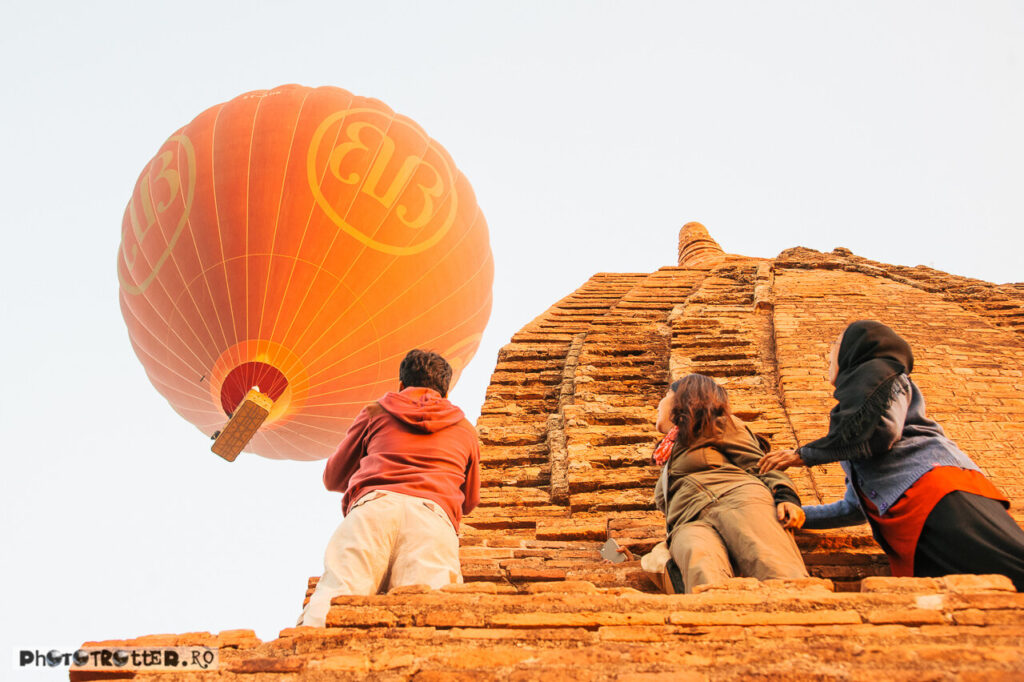
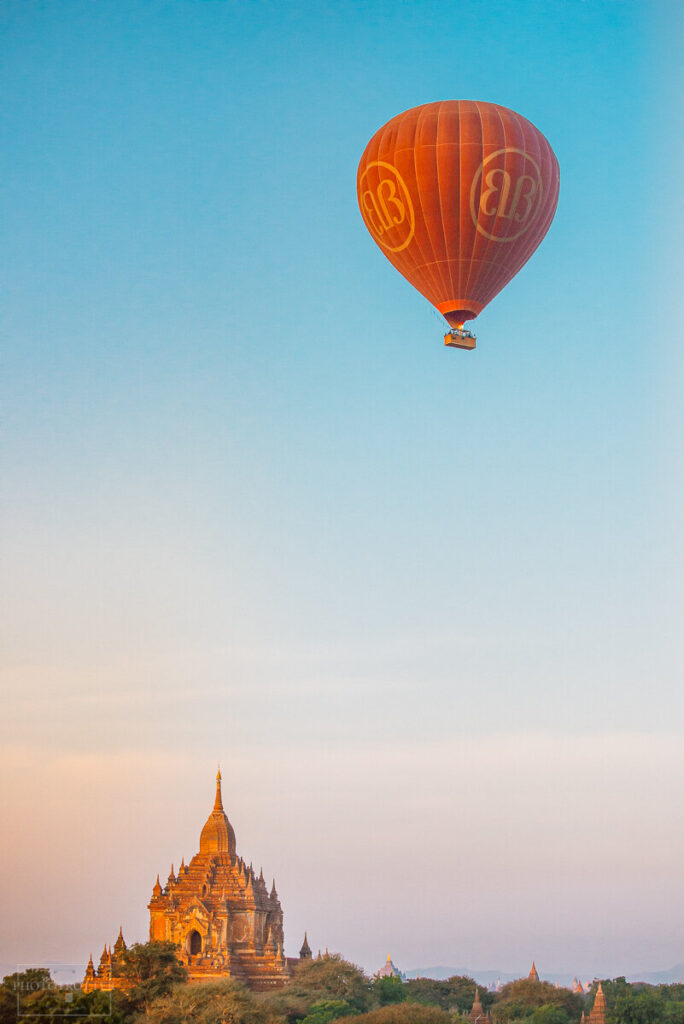
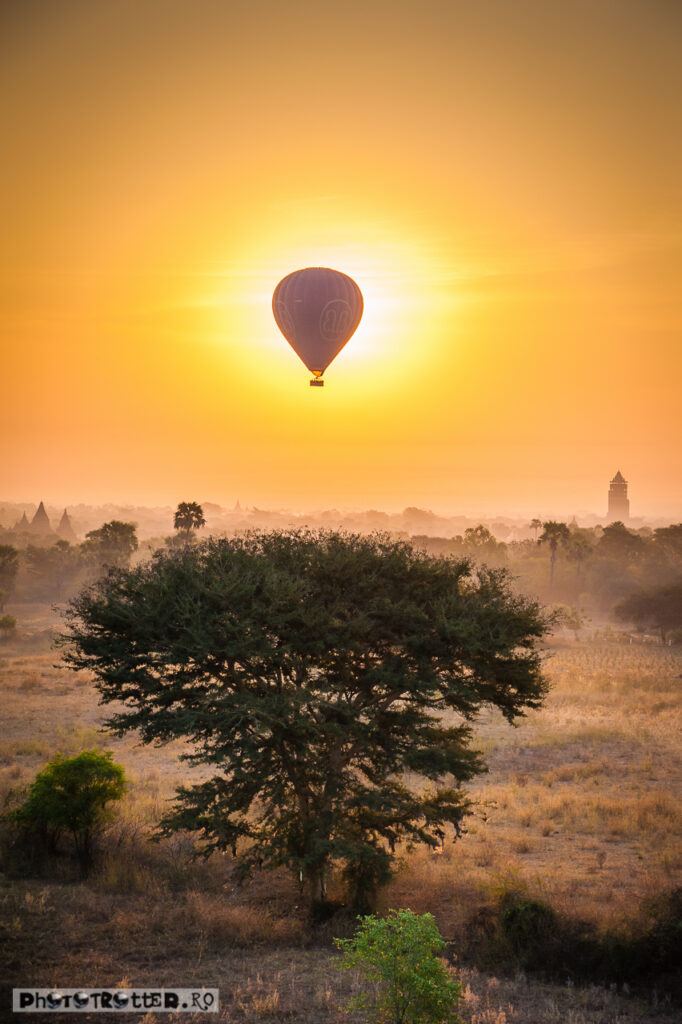
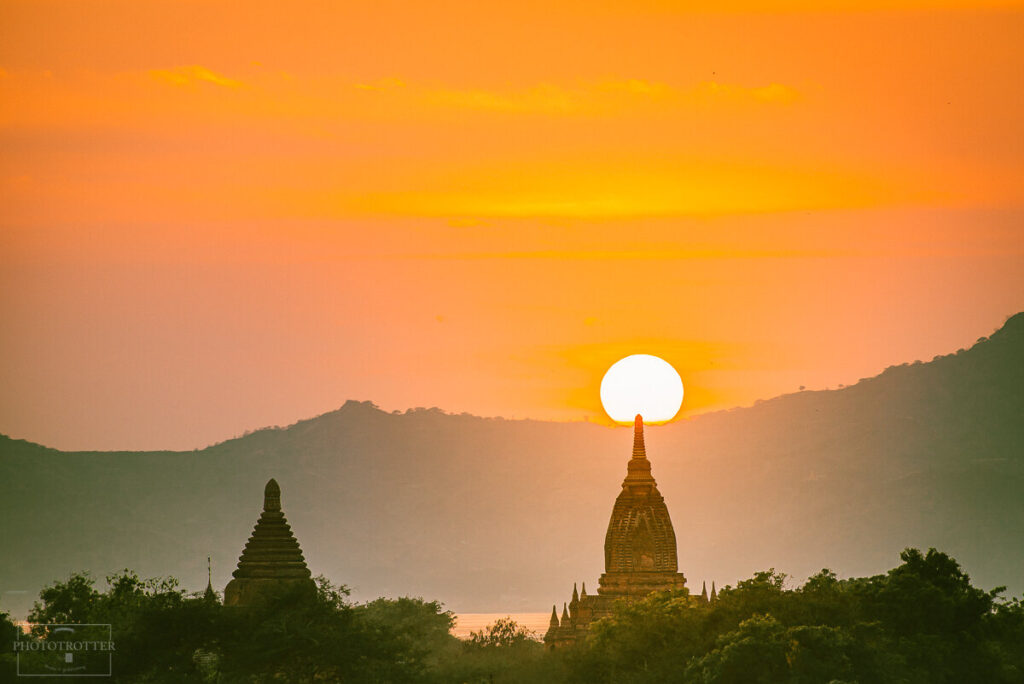
This time we skipped the balloon ride, we found the price of $330 per person a bit steep [2020 price update: more in the range of 350-450 USD, depending on season].
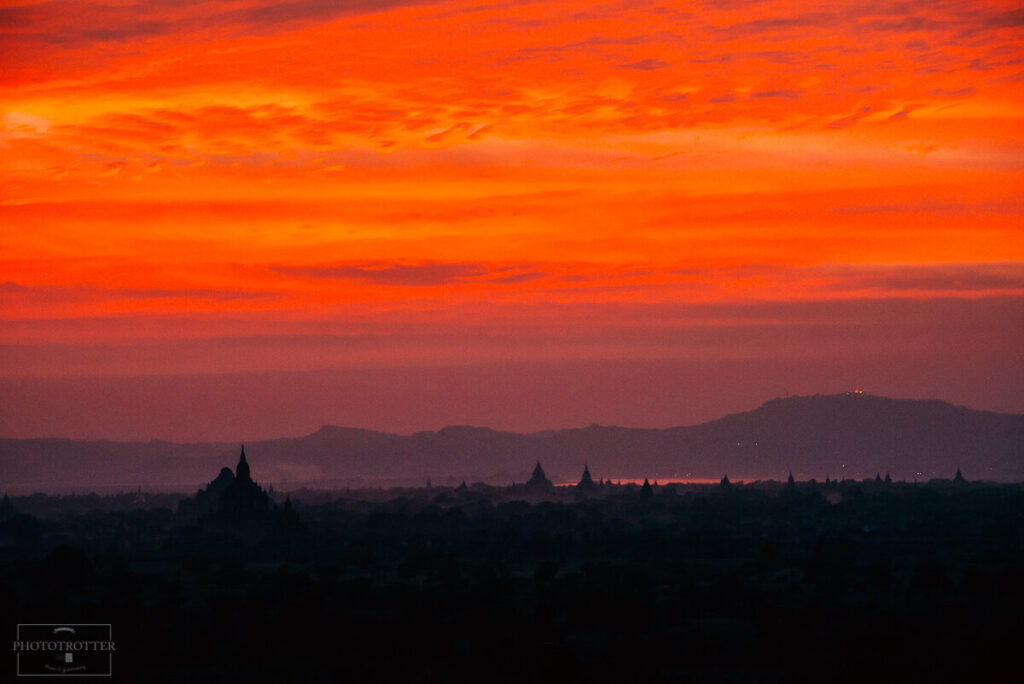
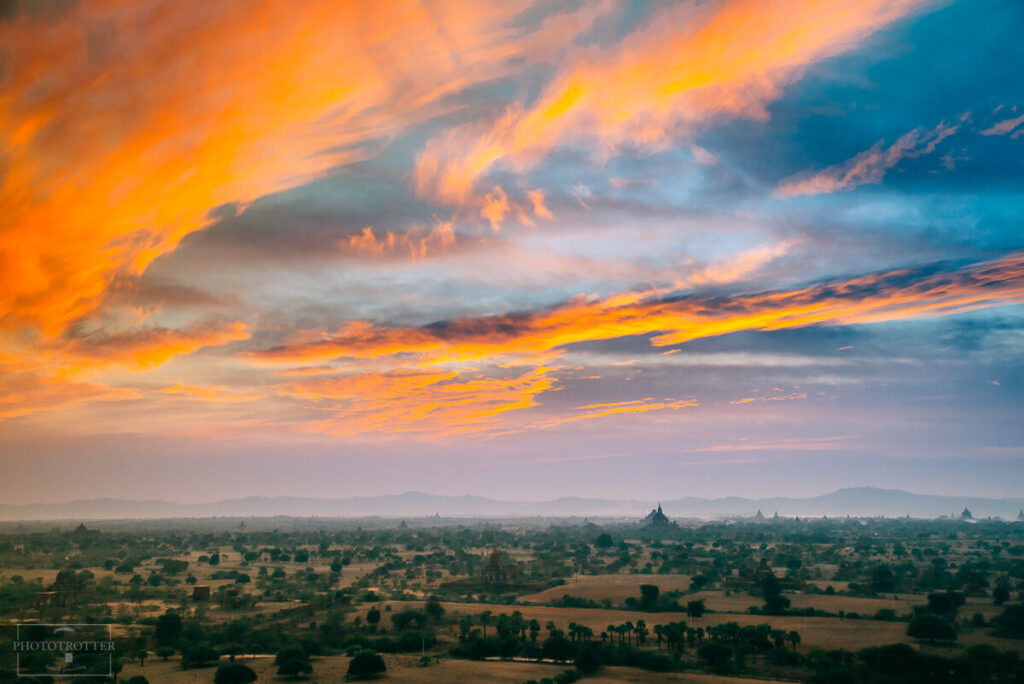
The whole country has surprisingly high prices for the level of comfort, civilization, cleanliness and infrastructure it offers. But after two days of slowly roasting in the heat on our bikes, and rolling on thick fluffy sand roads that not even the snakes liked, awfully sunny and scorching hot, we really did not mind spending about $25 on an air-conditioned taxi for the evening 19 km round-trip to the Nann Myint tower. That is a recent hideousness (early 2000s), about 60m high, with a panoramic terrace (and skybar) at the top, from where you can perfectly see the Bagan plain sprinkled with hundreds of temples, under the impossible colors of the sundown.
Colourful Sunset over Bagan – check.
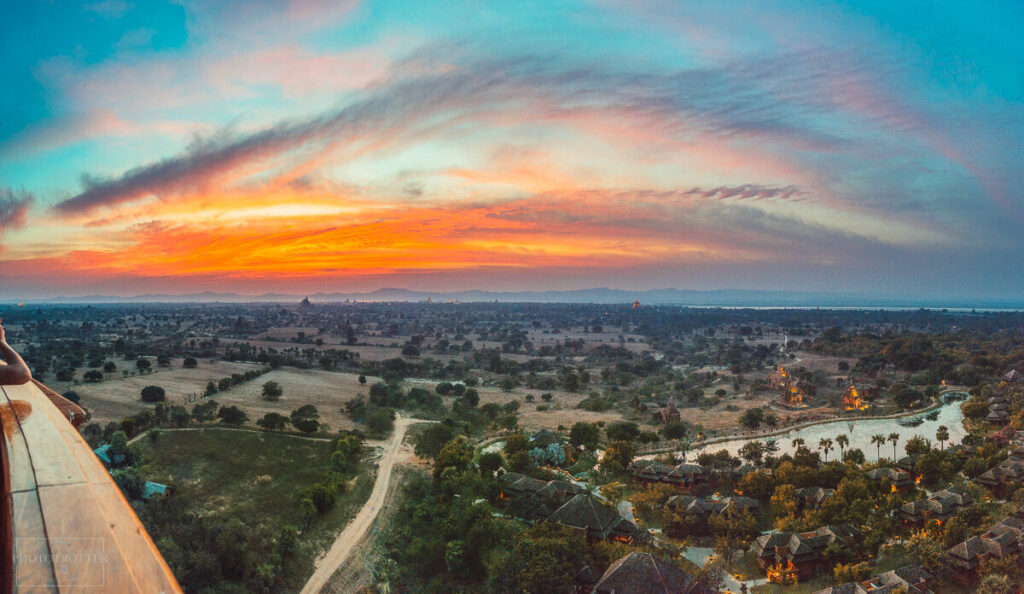
By the way, here’s some prices just to get an idea. The hotel we stayed at cost about 50 euros per night, and the room was austere and ugly, the bathroom a bit sordid and dirty, the wi-fi existed, but was void, without internet, the only exceptional thing being the grand and sardanapalic breakfast, served outdoors, under the morning hot air balloons.
For three times that price, you could get a room with a balcony towards a pool (that nobody used) and garden. For about 400 250 EUR a night [price updated 2020, surprised to see it drop], we could have stayed in a bungalow in the unreal green oasis at the foot of the tower from where we saw the fabulous sunset above.
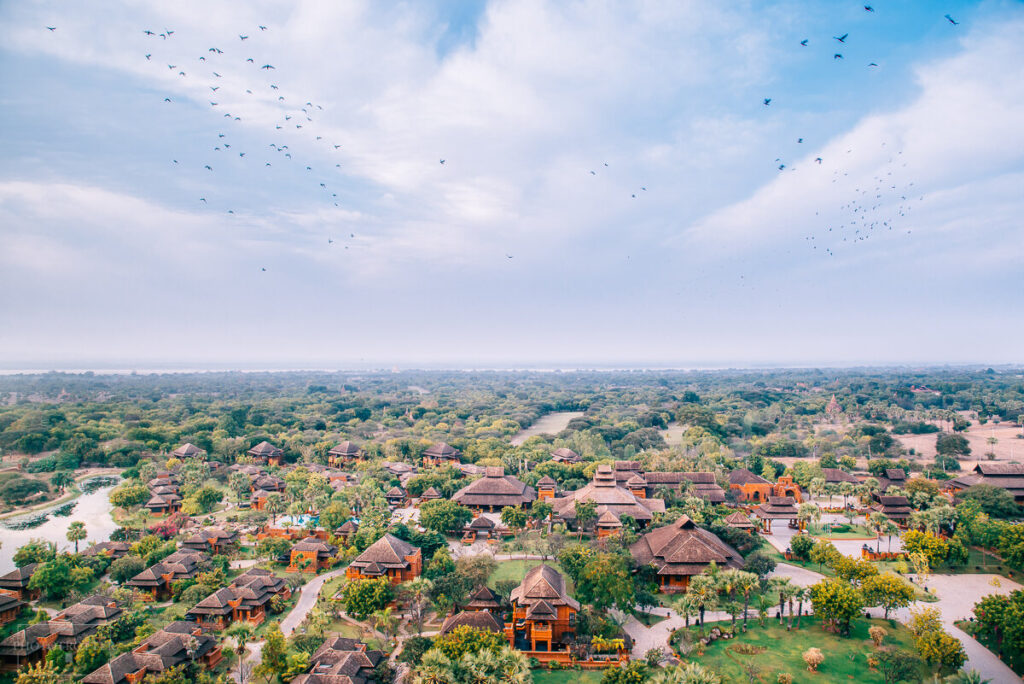
Would we go to Bagan again? By all means, yes. But this time by airplane. And with some extra 7-800 USD for a double balloon sunrise trip.
You can check out more photos in the gallery below.

Curious about Myanmar? Read more about it.
Original article written in 2015 in Romanian.





Leave a Reply