
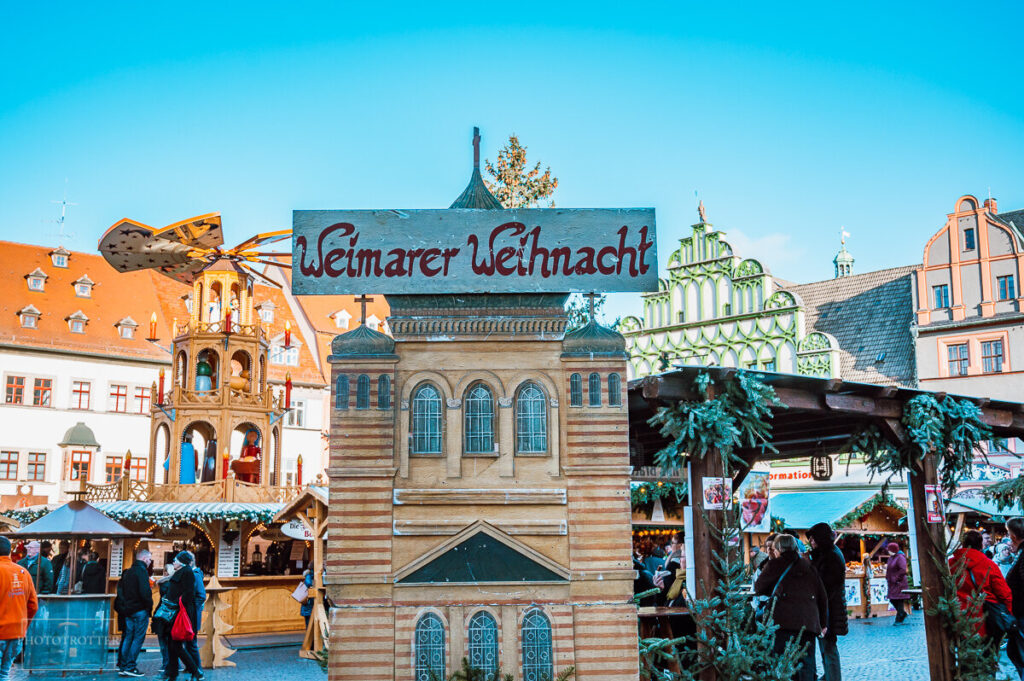
Weimar . Home of poets, musicians, philosophers and architects, vital center of the Golden Age of German Enlightenment, cradle and capital of the homonym and equally golden Weimar Republic; ‘Germany in a nutshell’, as a former president put it. And, come December, a new opportunity for the Phototrotters to visit a great piece of German culture and history while elegantly munching on a winter snack and sipping glühwein .
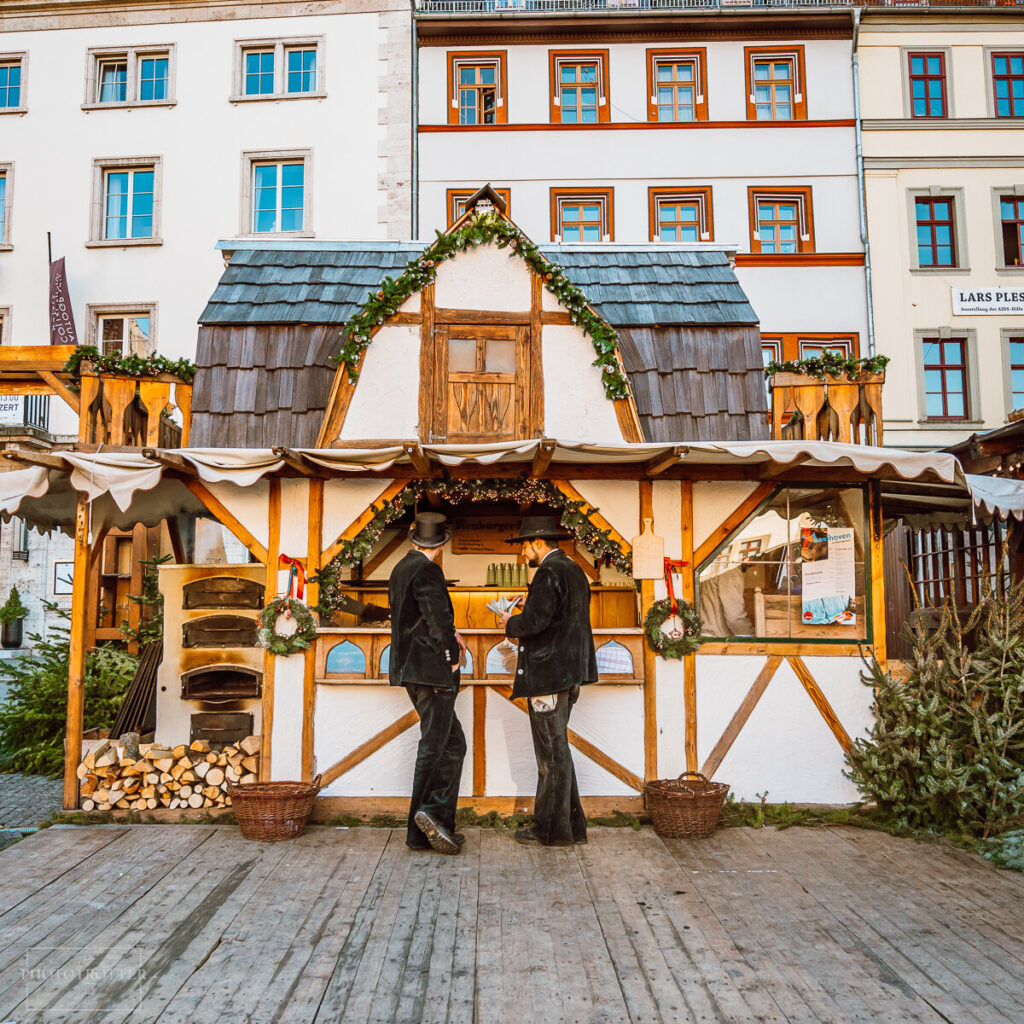
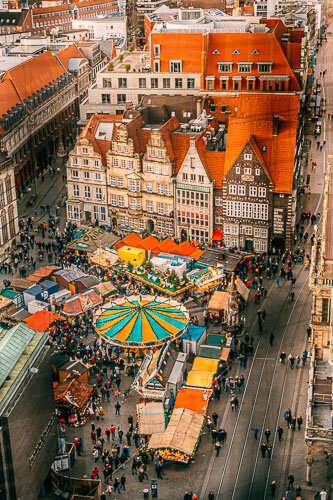
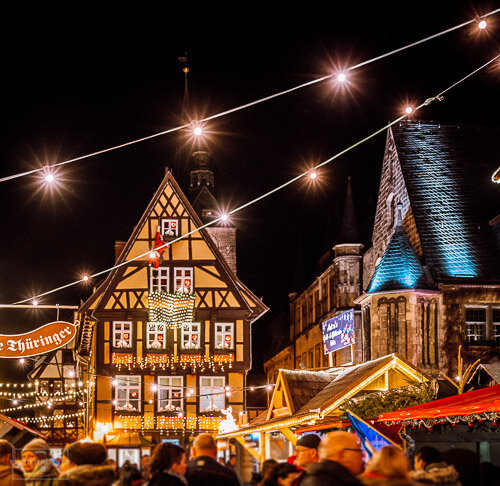
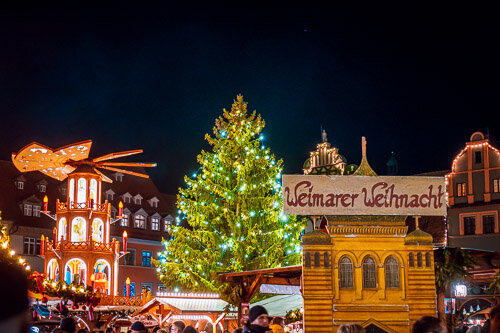
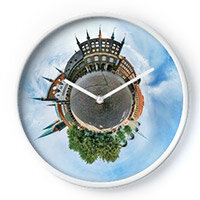
Weimar’s Weihnachtsmarkt is a typical German Christmas market. The little old central square, the Marktplatz, with its ornate Renaissance and Gothic houses and City Hall, is the backdrop and main stage of the wintery celebration.
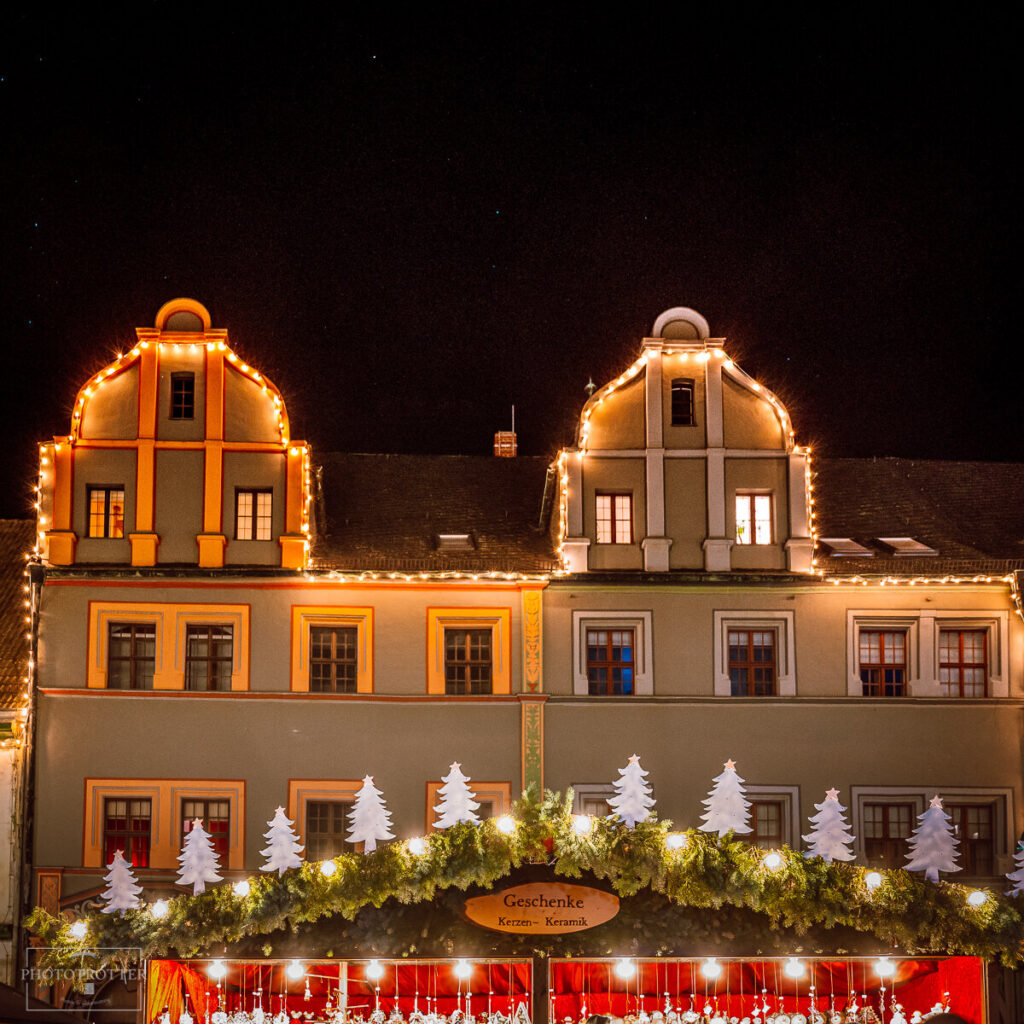
You probably knew that we owe the Christmas tree tradition mainly to the Germans, but did you know that Weimar is the place where the first public Christmas tree in Germany was put up outside and decorated for the local children in 1815? It was in front of a book shop in Market Square, and it has remained a tradition for over 200 years.
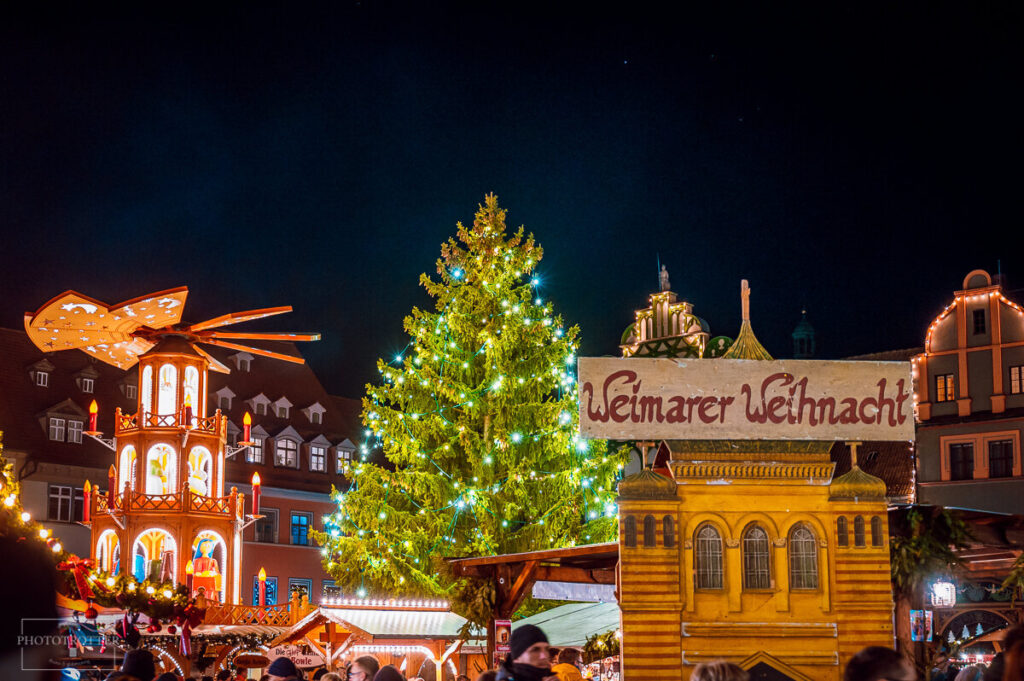
One of the first literary mentions of this wintery tradition can also be linked to Weimar, because it was Goethe, the town’s most famous resident, who wrote in The Sorrows of Young Werther , 1774: “ He began talking of the delight of the children, and of that age when the sudden appearance of the Christmas-tree, decorated with fruit and sweetmeats, and lighted up with wax candles, causes such transports of joy. “ Unlike his sorrowful young alter ego, Goethe himself had kept throughout his life that delight and joy – rumours go that he was very fond of the bookseller’s Christmas tree in the market.
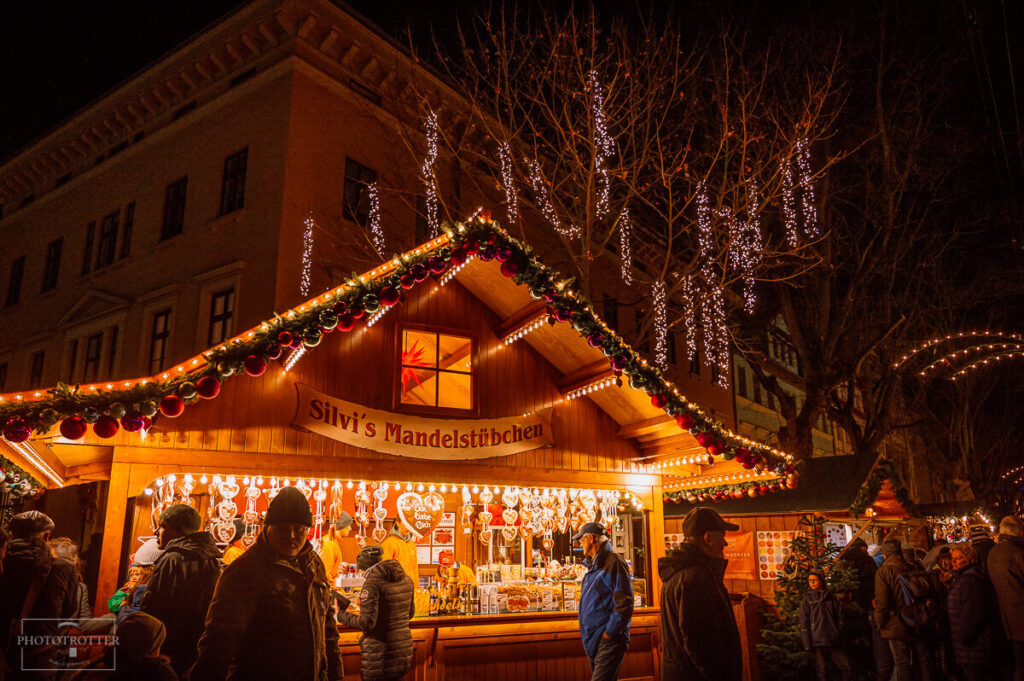
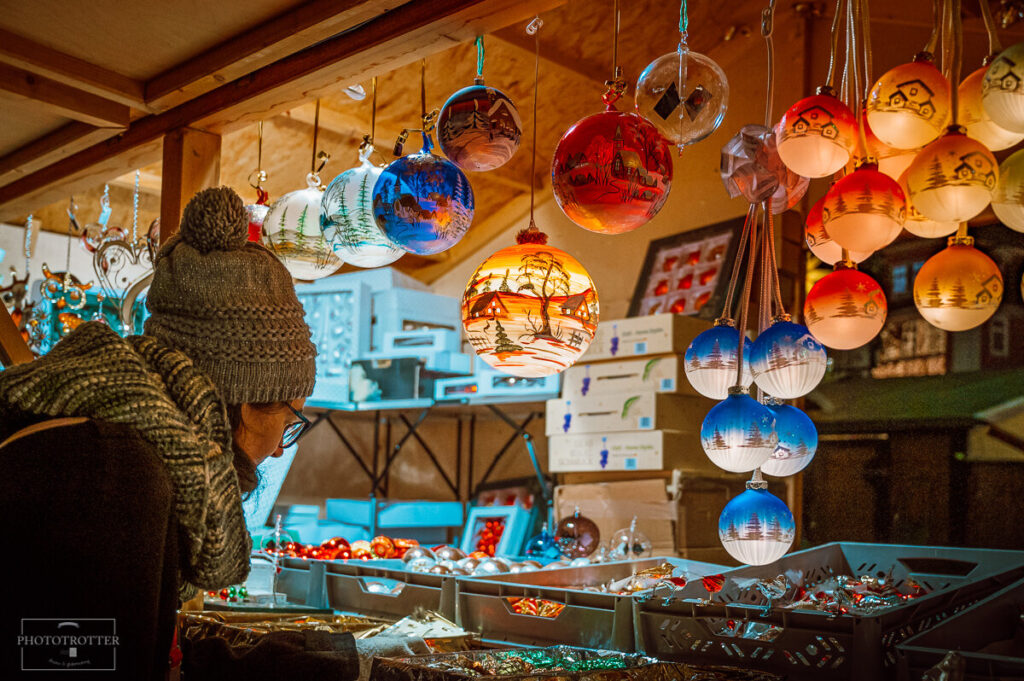
The fair goes on a little further down, on the pedestrian Schillerstraße, filling it with smells of roast almonds and the locally grown Thuringer Bratwurst, past Schiller’s house (another famous resident, also fond of Christmas celebrations) and the fountain with a little man and two geese (one of the many geese-fountains in Germany). The row of cheerful huts wiggles around a corner in a flurry of gingerbread spices and fluffy socks and opens up again in the other important square, Theaterplatz.
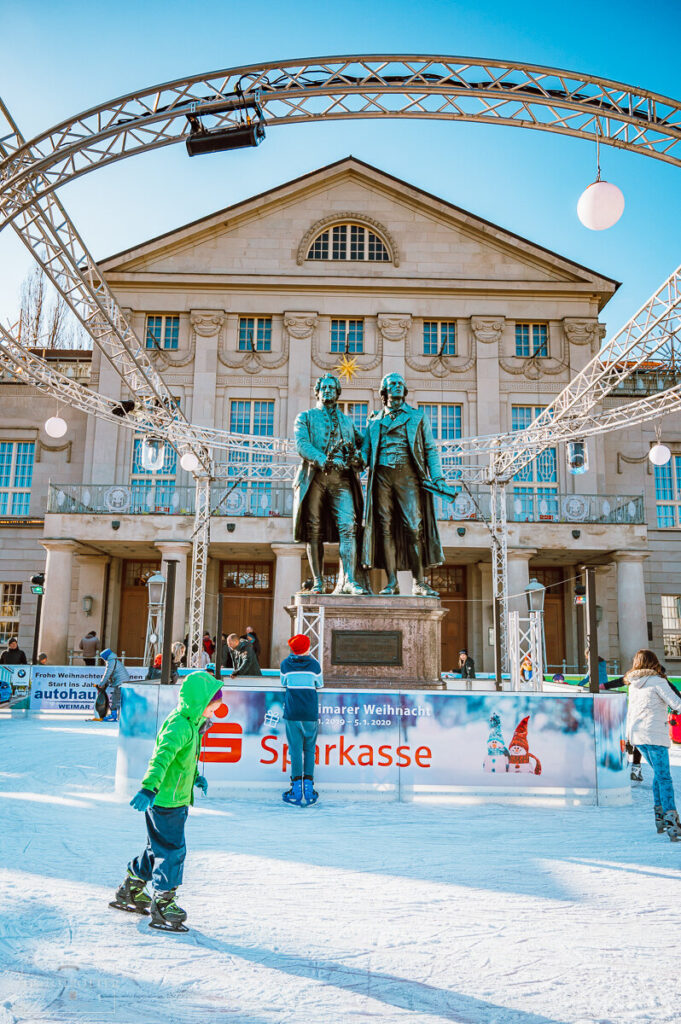
There, large as life, standing a braccetto on a pedestal, Goethe and Schiller are scrutinizing our mundane frolic, our “god-like plans and mouse-like businesses ”, while being uninterruptedly circled by a flock of giggling skaters.
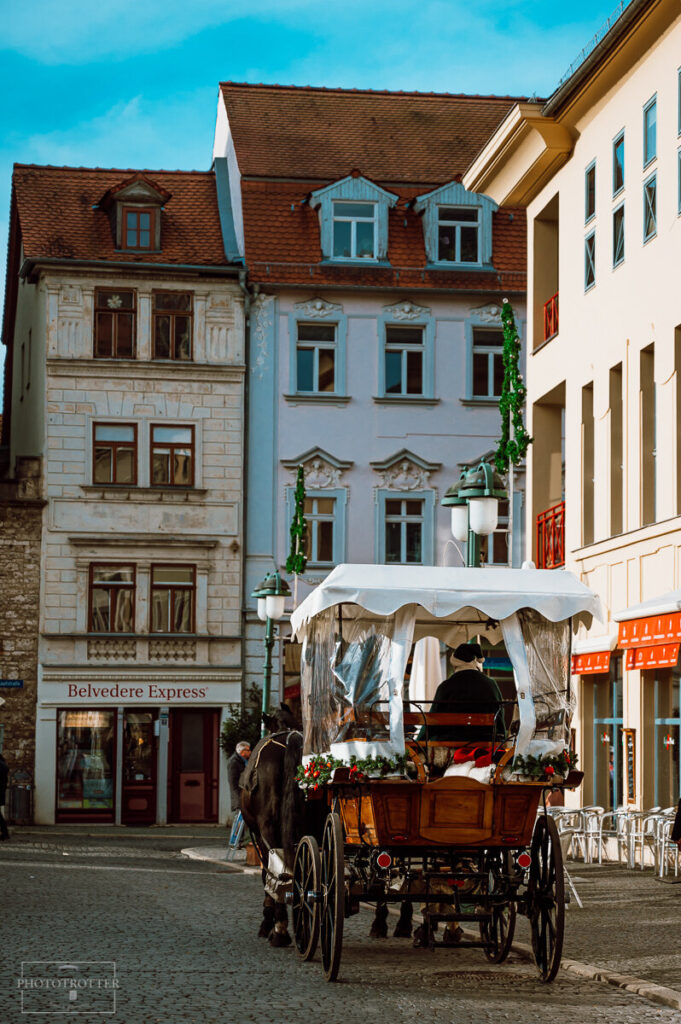
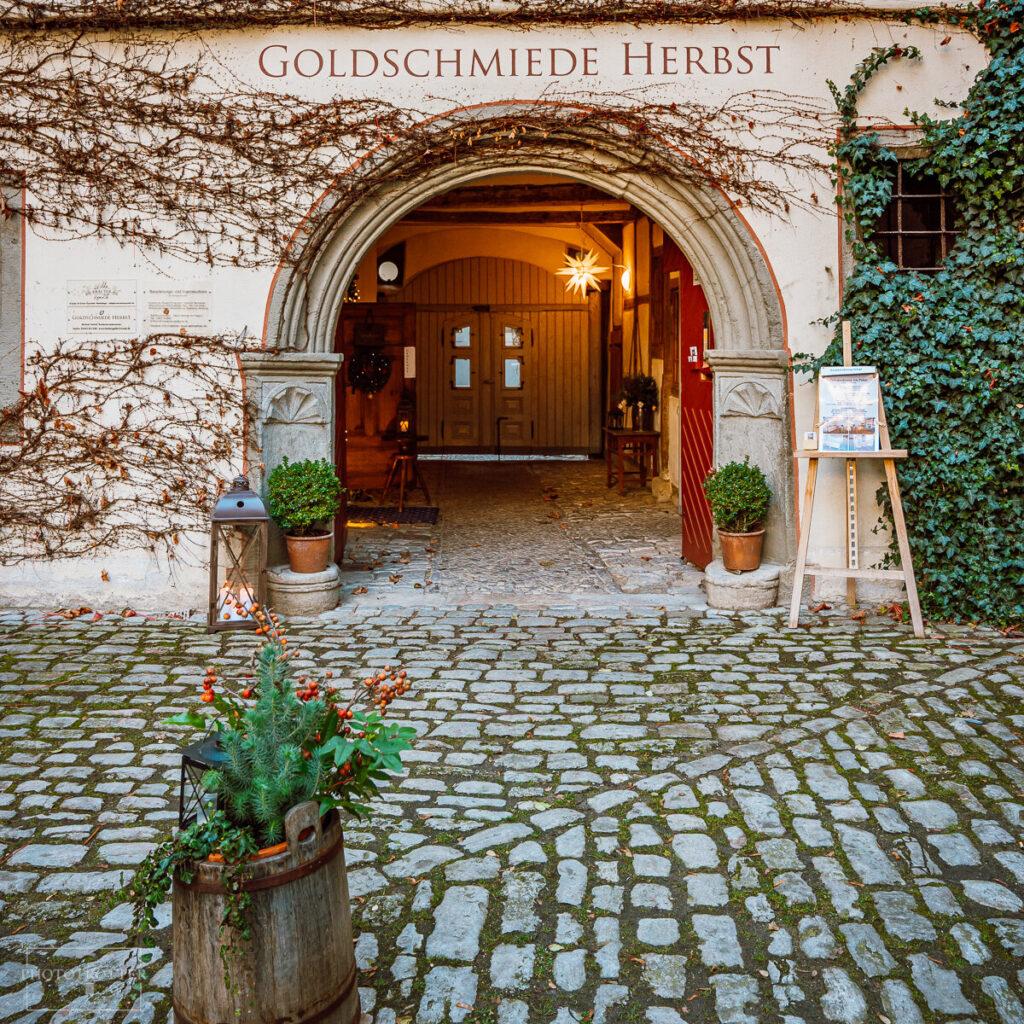
Stuffed and giddy like a Christmas goose, you should probably walk it off before hitting the langos shack (again…).
Weimar’s old town is classically beautiful, laden with history and cultural significance. For those who favour Modernism to Baroque or Classicism, a hop, skip and a jump north from the center starts the dry plainness of the Bauhaus buildings, the current born from the vision of Walter Gropius in Weimar a hundred years ago.
And should you be partial to Romanticism, Weimar has just the place for you: the delightfully green Park on the Ilm, landscaped in the 17th century English garden-style, with all the required elements: ruin – check, grotto – check, exotic – check that too, under “sphinx”.
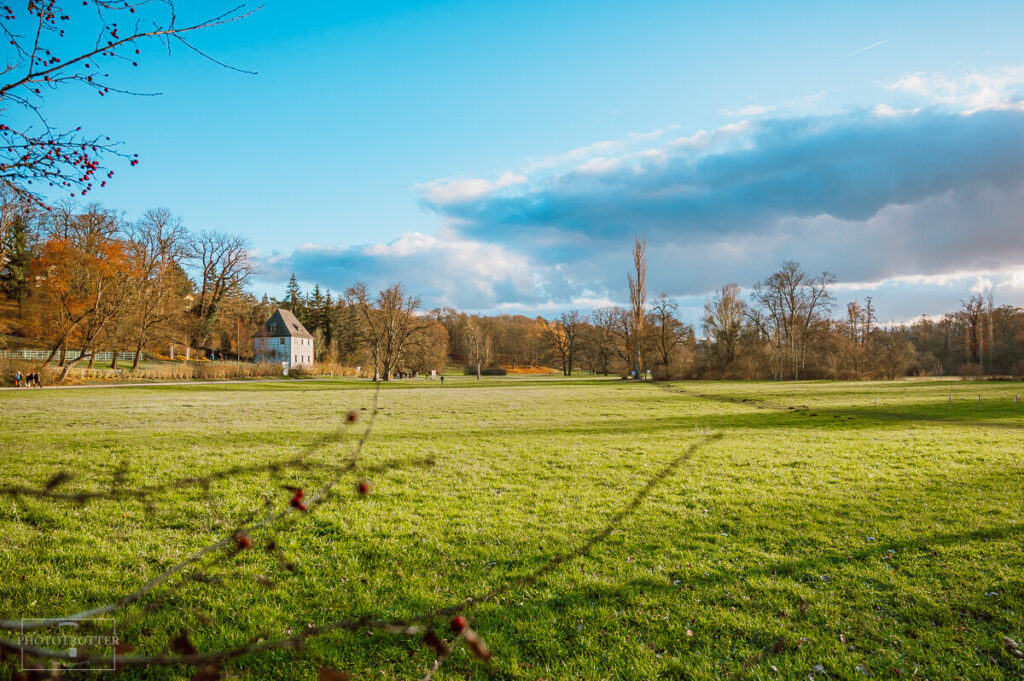
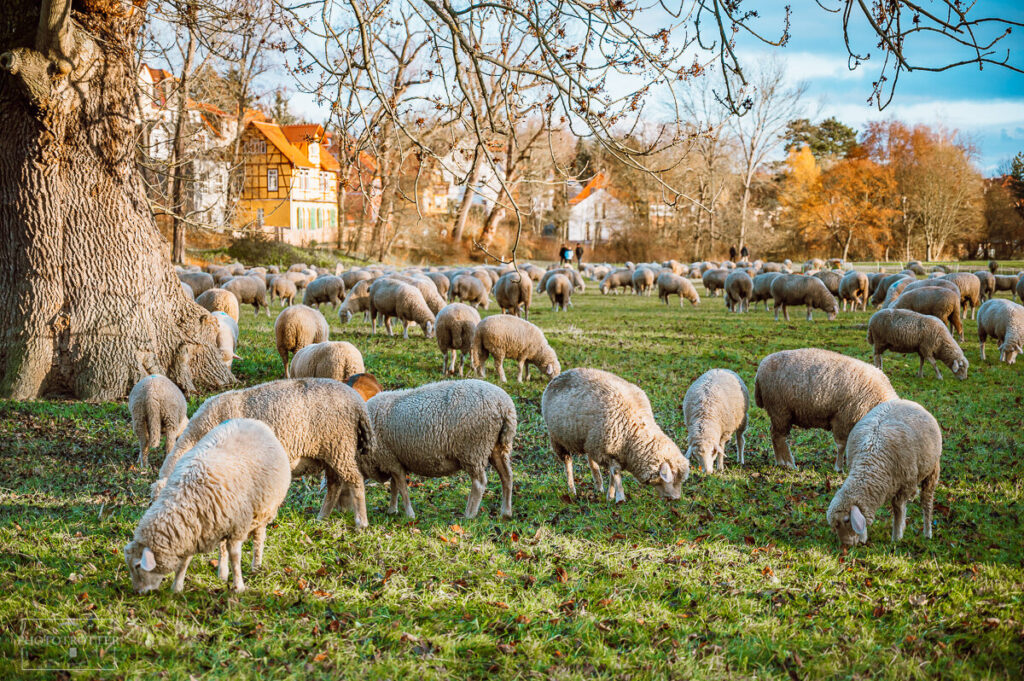
The green meadow was one of Goethe’s favourite places. He even had a house there, in the garden, and it was close enough to the river so that he could wander and bathe naked in the Ilm, sometimes alone, sometimes with his “local“ friend, the young and slightly libertine Duke Carl August, later to become not less libertine, but Grand Duke of Sachsen-Weimar-Eisenach. But more about this in a future walk through Weimar.
Until then, more photos in the gallery below.



Christmas stories










Leave a Reply